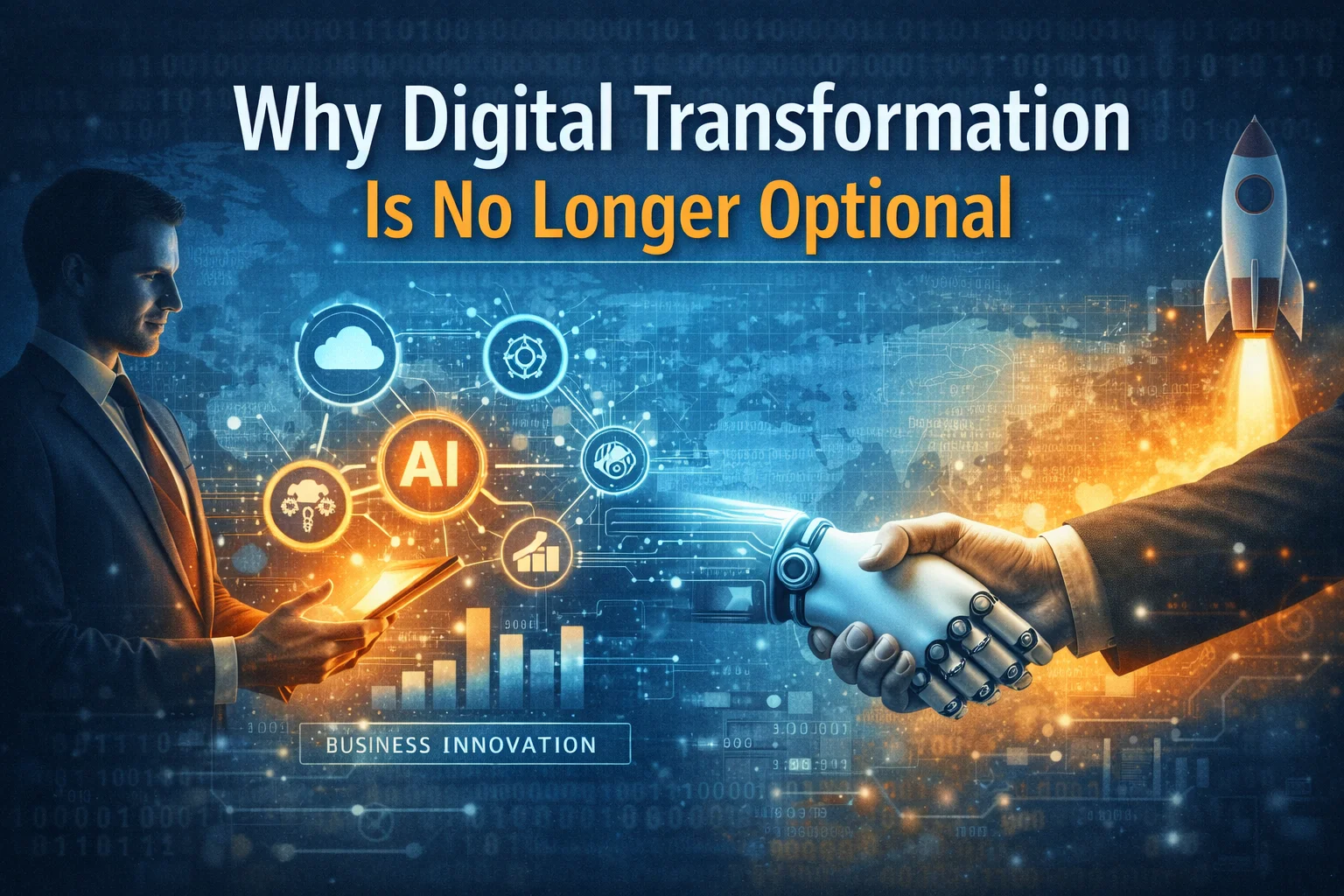

In today’s fast-moving digital economy, businesses face constant pressure to innovate, adapt, and compete. Customers expect seamless online experiences, employees demand flexible digital tools, and competitors are rapidly adopting advanced technologies. In this environment, digital transformation is no longer optional — it is essential for survival and growth.
Digital transformation goes beyond simply upgrading software. It involves rethinking business models, processes, customer engagement strategies, and organizational culture to thrive in a technology-driven world.
The Changing Business Landscape
Consumer behavior has shifted dramatically. Customers now expect instant communication, personalised experiences, and digital-first services. Businesses that fail to meet these expectations risk losing market share.
Additionally, global competition has increased. Companies are no longer competing locally — they are competing digitally on a global scale. Organisations that delay digital transformation often struggle to keep up with faster, more agile competitors.
Increased Operational Efficiency
Modern digital tools allow businesses to automate repetitive tasks, streamline workflows, and reduce operational costs. Manual systems slow down productivity and increase the risk of human error.
Digital transformation improves efficiency by:
- Automating administrative processes
- Integrating data across departments
- Reducing paperwork and manual approvals
- Enhancing communication through digital platforms
Companies that embrace these changes operate faster and more efficiently.
Data-Driven Decision Making
In the digital age, data is one of the most valuable business assets. Organisations that leverage analytics and real-time insights make smarter, faster decisions.
Without digital systems, businesses rely on outdated reports and assumptions. Digital transformation enables companies to:
- Monitor performance in real time
- Predict trends and customer demand
- Identify risks early
- Improve strategic planning
Data-driven businesses gain a significant competitive advantage.
Enhanced Customer Experience
Customer expectations continue to rise. Fast responses, easy online transactions, and personalised services are now standard.
Digital transformation supports:
- Online customer support systems
- Personalized marketing campaigns
- Omnichannel communication
- Faster order processing
Companies that prioritise digital customer experiences build stronger loyalty and trust.
Business Resilience and Adaptability
Recent global disruptions have shown that businesses without digital capabilities struggle during unexpected crises. Remote work systems, cloud platforms, and digital communication tools are critical for maintaining continuity.
Digital transformation enables:
- Remote collaboration
- Flexible operations
- Scalable systems
- Faster response to market changes
Organizations that invest in digital infrastructure are better prepared for future challenges.
Staying Competitive in the Digital Economy
Technology adoption is accelerating across all industries. Businesses that delay transformation risk becoming irrelevant. Competitors who embrace automation, artificial intelligence, and cloud technologies can deliver services faster and at lower costs.
Digital transformation is not about keeping up with trends — it is about staying competitive and future-ready.
Conclusion
Digital transformation is no longer a choice reserved for large enterprises. It is a strategic necessity for businesses of all sizes. By improving efficiency, enhancing customer experiences, leveraging data, and strengthening resilience, digital transformation enables organisations to thrive in an increasingly digital world.
Businesses that embrace change position themselves for sustainable growth, innovation, and long-term success.
✨ For more expert insights on digital strategy, business innovation, and modern technology trends, visit Almuhtadi Ventures.
FAQs:
1. Why is digital transformation important today?
Because customers, markets, and competitors operate digitally, businesses must adapt to remain relevant and competitive.
2. What happens if a business ignores digital transformation?
It may experience declining efficiency, reduced customer satisfaction, and loss of market share.
3. Is digital transformation only for large companies?
No. Small and medium-sized businesses can also benefit from scalable digital tools and gradual implementation.
4. How does digital transformation improve resilience?
It enables remote work, cloud-based systems, and flexible operations that help businesses adapt to disruptions.
5. Does digital transformation require a large budget?
Not necessarily. It can be implemented in phases, prioritising areas with the highest impact.