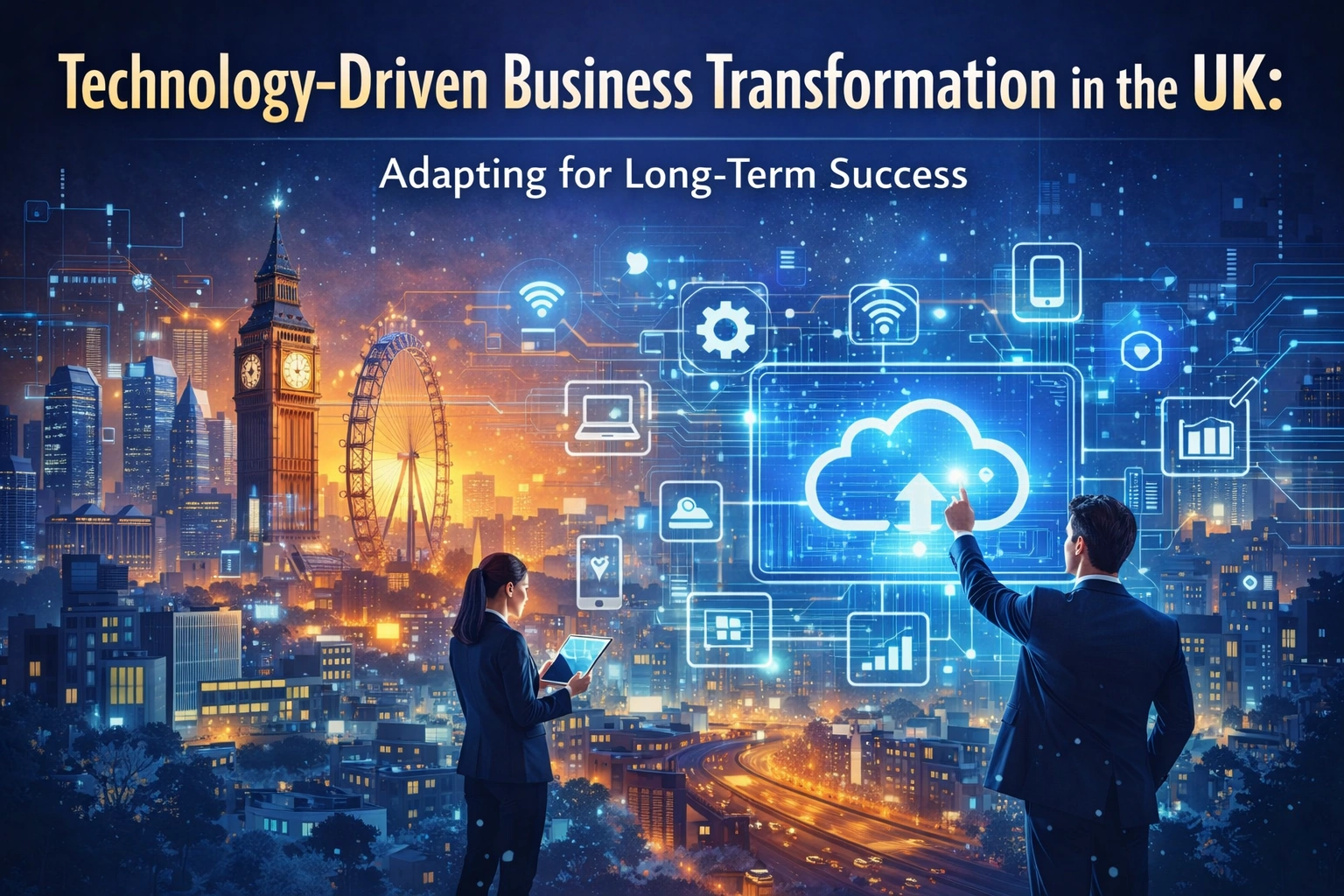

Technology-Driven Business Transformation in the UK: Adapting for Long-Term Success
Across industries, technology is no longer just a support function — it is a core driver of strategy. Technology-driven business transformation UK organisations implement is reshaping how companies operate, compete, and deliver value.
From automation and cloud computing to artificial intelligence and data analytics, modern technologies are redefining business models.
This article explores how UK businesses can successfully navigate technology-driven transformation.
What Is Technology-Driven Business Transformation?
Technology-driven transformation refers to restructuring business processes, services, and operations around modern digital tools.
It may involve:
- Cloud migration
- AI integration
- Workflow automation
- Digital customer engagement platforms
- Advanced analytics systems
Transformation is not simply technology adoption — it requires strategic alignment.
Why UK Businesses Must Adapt
The UK marketplace is increasingly digital and competitive.
Technology-driven business transformation UK companies pursue enables them to:
- Improve operational efficiency
- Reduce costs
- Strengthen cybersecurity
- Enhance customer experience
- Increase scalability
Businesses that fail to modernise risk losing relevance.
1️⃣ Cloud Infrastructure Modernisation
Migrating to cloud-based systems allows organisations to:
- Scale operations efficiently
- Enable remote work
- Improve collaboration
- Reduce infrastructure costs
Cloud transformation is often the foundation of digital growth.
2️⃣ Artificial Intelligence and Automation
AI technologies can improve:
- Customer service via chatbots
- Predictive analytics
- Fraud detection
- Process optimisation
Automation reduces manual workload and improves productivity.
3️⃣ Digital Customer Experience Platforms
Modern consumers expect seamless digital interaction.
Businesses must provide:
- Mobile-friendly platforms
- Personalised experiences
- Fast digital services
- Secure online transactions
Customer-centric digital systems improve retention.
4️⃣ Cybersecurity as a Core Component
Technology expansion increases digital risk.
Successful technology-driven business transformation UK organisations implement includes:
- Integrated cybersecurity frameworks
- Data protection policies
- Continuous monitoring systems
- Compliance with UK GDPR
Security must evolve alongside innovation.
5️⃣ Cultural and Workforce Transformation
Technology alone does not guarantee success.
Businesses must:
- Upskill employees
- Encourage digital literacy
- Promote innovation culture
- Support change management
Human adaptability is key to transformation success.
Common Challenges
Organisations may face:
- Legacy system integration issues
- Budget constraints
- Skills shortages
- Resistance to change
- Data security concerns
Strategic planning reduces disruption.
Long-Term Benefits
When executed properly, technology-driven business transformation UK companies adopt results in:
- Stronger operational resilience
- Improved competitiveness
- Increased efficiency
- Enhanced decision-making
- Sustainable growth
Transformation is an ongoing journey, not a one-time initiative.
Frequently Asked Questions (FAQ)
1. Is technology-driven transformation suitable for SMEs?
Yes. Many solutions are scalable and adaptable.
2. Does transformation require large investment?
Costs vary, but phased implementation spreads investment over time.
3. How long does transformation take?
It depends on scope and organisational readiness.
4. Is cybersecurity part of transformation?
Yes. Security integration is essential.
5. Can transformation improve profitability?
Yes. Efficiency gains and innovation often increase long-term revenue.