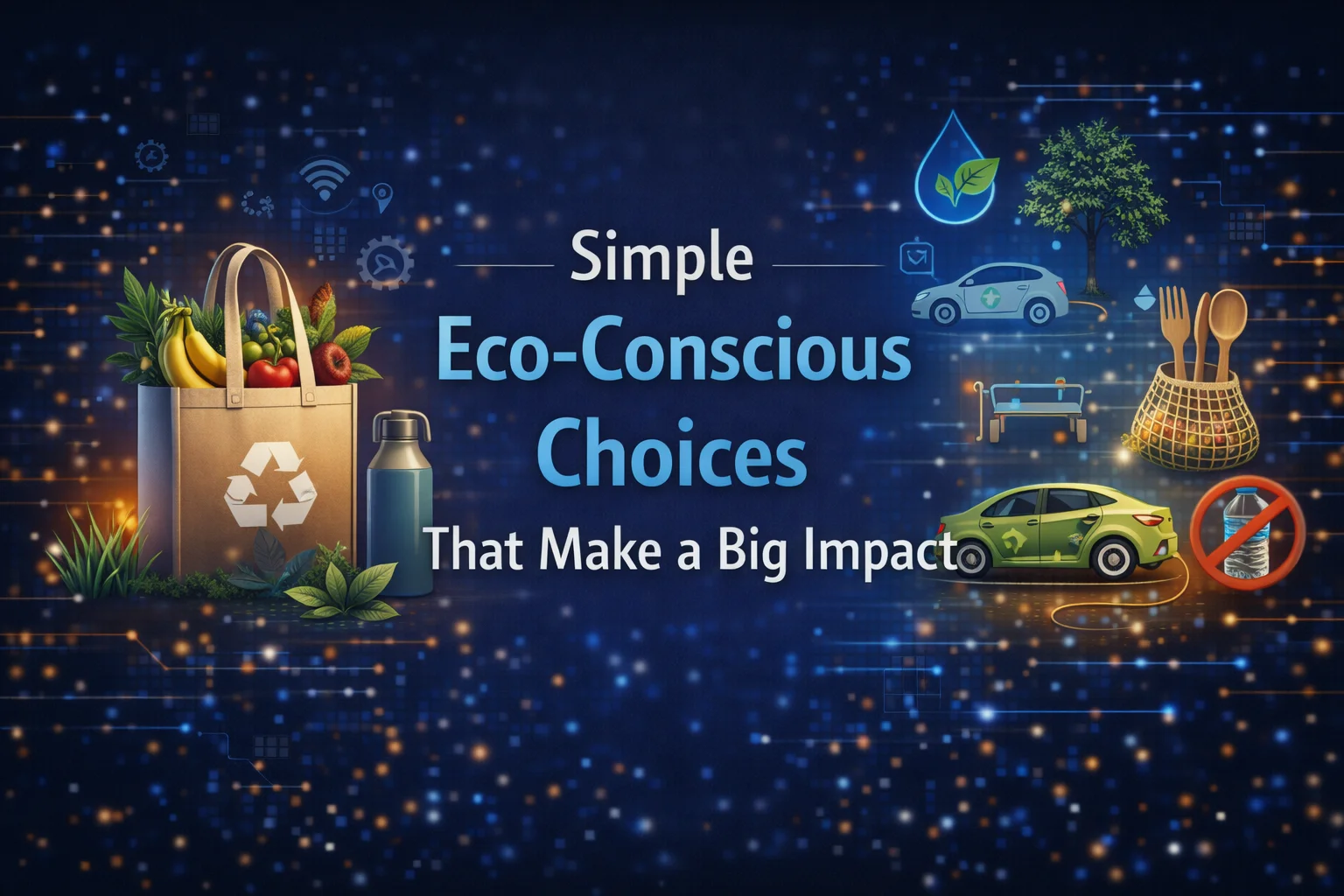

Living sustainably does not require drastic lifestyle changes or expensive solutions. In fact, some of the most powerful environmental benefits come from small, consistent actions. Understanding eco-conscious choices in everyday life helps individuals make smarter decisions that collectively create a meaningful impact on the planet.
Eco-conscious living is about awareness, intention, and progress—not perfection.
What Does Being Eco-Conscious Mean?
Being eco-conscious means making everyday decisions with an awareness of how they affect the environment. It focuses on reducing waste, conserving resources, and choosing options that cause less harm to nature.
These choices support long-term sustainability while still fitting into modern lifestyles.
Start with Sustainable Lifestyle Changes at Home
Many impactful changes begin at home. Small sustainable lifestyle changes can significantly reduce energy use and waste without sacrificing comfort.
Simple actions include:
- Turning off lights and electronics when not in use
- Using energy-efficient bulbs and appliances
- Reducing unnecessary heating or cooling
These changes lower resource consumption and household costs at the same time.
Adopt Eco-Friendly Daily Habits
Daily routines offer countless opportunities for improvement. Adopting eco-friendly daily habits makes sustainability feel natural rather than forced.
Examples include:
- Carrying reusable bags and bottles
- Choosing reusable containers over disposable ones
- Avoiding excessive packaging
Over time, these habits become second nature and lead to noticeable environmental benefits.
Focus on Reducing Environmental Impact Through Waste Reduction
Waste is one of the biggest contributors to environmental damage. Reducing environmental impact starts with creating less waste in the first place.
Practical low-waste living tips include:
- Buying products in bulk
- Repairing items instead of replacing them
- Recycling correctly and responsibly
Less waste means fewer resources are extracted and less pollution is created.
Practice Responsible Consumption Choices
Responsible consumption choices involve buying only what is needed and prioritising quality over quantity. Supporting long-lasting, ethically produced items reduces the demand for fast, disposable products.
Mindful consumption encourages:
- Less clutter
- Lower environmental strain
- More intentional spending
Every purchase becomes an opportunity to support sustainability.
Embrace Green Living Practices in Everyday Decisions
Green living practices extend beyond the home into transportation, food choices, and daily activities.
Examples include:
- Walking or cycling for short trips
- Reducing food waste through better planning
- Choosing locally sourced or seasonal products
These decisions, though small individually, add up to significant positive change.
Why Small Actions Matter
Sustainability is not driven by one major action but by millions of small ones. When individuals consistently make eco-conscious choices, they influence demand, encourage better production practices, and contribute to collective environmental responsibility.
Small changes, repeated daily, shape a more sustainable future.
FAQs:
1. What are eco-conscious choices?
Eco-conscious choices are everyday decisions that reduce harm to the environment, such as using reusable products, conserving energy, and minimising waste.
2. Can small eco-friendly actions really make a difference?
Yes. When practiced consistently by many people, small actions like reducing plastic use and saving energy create a significant positive environmental impact.
3. What are the easiest eco-conscious habits to start with?
Simple habits include carrying reusable bags, avoiding single-use plastics, turning off unused lights, and recycling properly.
4. How do eco-conscious choices help the environment?
They reduce pollution, conserve natural resources, lower carbon emissions, and support healthier ecosystems.
5. Are eco-conscious choices expensive?
Not at all. Many eco-conscious choices actually save money over time by reducing energy consumption and encouraging mindful spending.
6. How can I maintain an eco-conscious lifestyle long term?
Start with small changes, stay consistent, and gradually adopt more sustainable habits that fit naturally into your daily routine.
Conclusion
Eco-conscious living is achievable for everyone. By making eco-conscious choices in everyday life, individuals can create meaningful change through sustainable lifestyle changes, eco-friendly daily habits, and thoughtful consumption. These simple actions reduce environmental impact, conserve resources, and support a healthier planet—one choice at a time.
✨ Want to explore more insights on sustainable living, eco-conscious habits, and responsible lifestyle choices? Visit Almuhtadi Ventures for more informative articles, practical guides, and expert knowledge to help you live more sustainably every day.