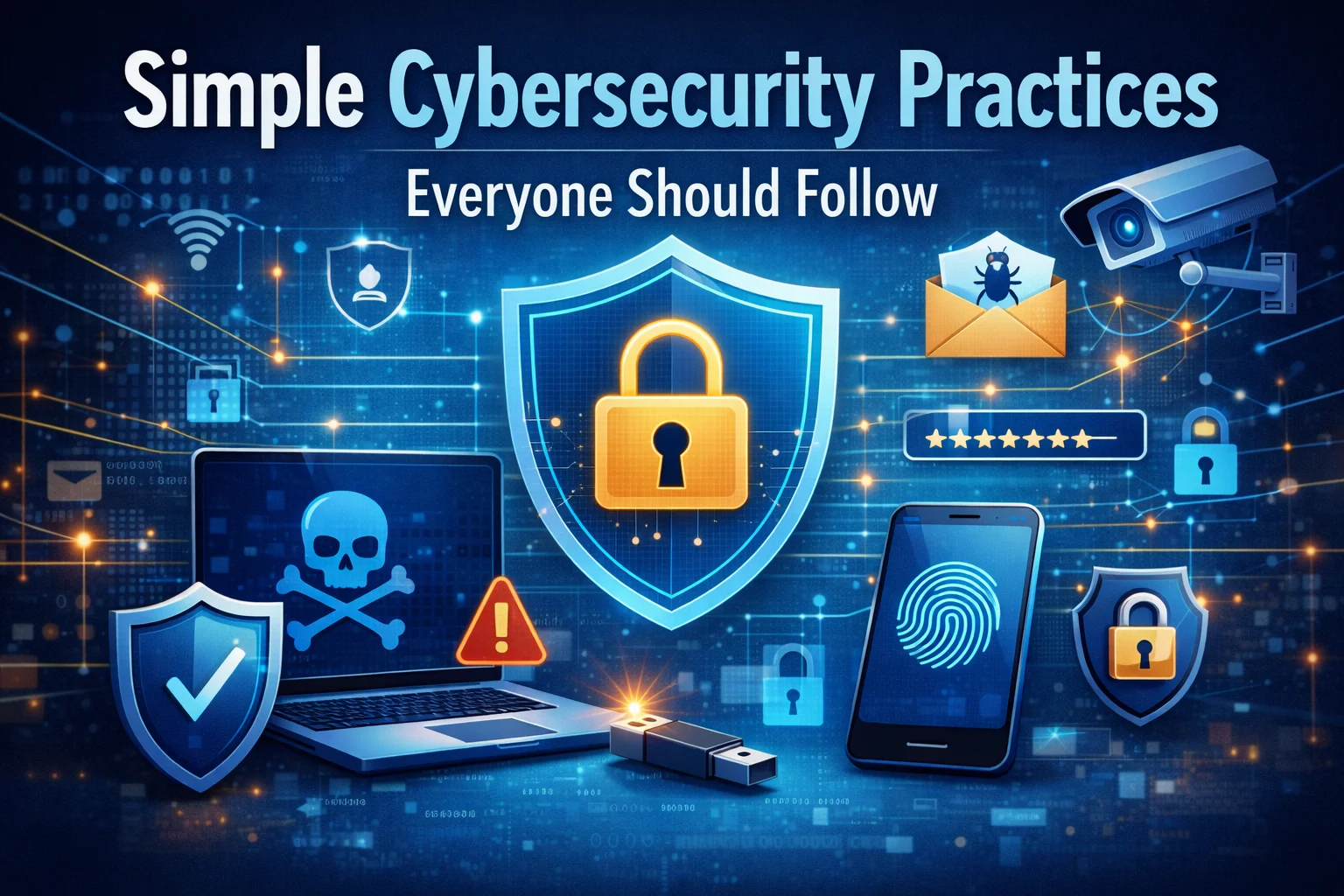

As more daily activities move online, cybersecurity has become a shared responsibility. From checking emails and shopping online to managing finances and working remotely, people interact with digital systems constantly. Unfortunately, cybercriminal often target everyday users who are unaware of basic security risks. Understanding and applying simple cybersecurity practices can significantly reduce the chances of falling victim to online threats.
Cybersecurity does not need to be complicated. Small, consistent habits can provide strong protection in the digital age.
Why Cybersecurity Matters for Everyone
Many people believe cybersecurity is only important for large organisations or technical professionals. In reality, individuals are frequently targeted because personal devices and accounts are often less protected.
Cyber attacks can lead to:
- Identity theft
- Financial loss
- Account takeovers
- Loss of personal data
- Emotional stress and disruption
Following basic cybersecurity practices helps protect not only personal information but also friends, family, and professional networks.
Use Strong and Unique Passwords
One of the simplest and most effective cybersecurity practices is using strong passwords. Weak or reused passwords are among the most common causes of account breaches.
Good password habits include:
- Using a combination of letters, numbers, and symbols
- Avoiding personal information such as names or birthdays
- Creating a unique password for each account
- Updating passwords regularly
Strong passwords act as the first line of defence against unauthorised access.
Enable Two-Factor Authentication
Two-factor authentication adds an extra layer of security by requiring a second verification step, such as a code sent to a phone or email.
Even if a password is compromised, two-factor authentication can prevent attackers from accessing the account. It is especially important for:
- Email accounts
- Online banking
- Social media profiles
- Work-related platforms
Enabling this feature significantly improves account security.
Be Cautious with Emails and Messages
Phishing remains one of the most common cyber threats. Attackers send fake emails or messages designed to look legitimate and trick users into sharing sensitive information.
To stay safe:
- Avoid clicking on unknown links
- Check sender addresses carefully
- Be cautious of urgent or threatening messages
- Never share passwords or verification codes
When in doubt, verify requests directly through official channels.
Keep Devices and Software Updated
Software updates often include security patches that fix known vulnerabilities. Delaying updates can leave devices exposed to cyber threats.
Regularly updating:
- Operating systems
- Mobile apps
- Browsers
- Security software
helps protect devices from malware and exploits that target outdated systems.
Use Secure Internet Connections
Public Wi-Fi networks can be convenient but risky. Unsecured connections may allow attackers to intercept data.
To improve safety:
- Avoid accessing sensitive accounts on public Wi-Fi
- Use secure networks whenever possible
- Turn off automatic Wi-Fi connections
- Consider using encrypted connections
Being mindful of network security reduces the risk of data exposure.
Install Trusted Security Software
Security software helps detect and block malicious activity. While no tool offers complete protection, trusted security applications add an important safety layer.
Security software can:
- Detect malware and viruses
- Block unsafe websites
- Alert users to suspicious activity
- Protect devices in real time
Using reputable tools and keeping them updated enhances overall cybersecurity.
Review Privacy and App Permissions
Many apps request access to personal data that may not be necessary for their function. Reviewing permissions regularly helps limit unnecessary data exposure.
Users should:
- Check app permissions
- Disable access that is not required
- Remove unused apps
- Review privacy settings on platforms
Limiting data access reduces potential privacy risks.
Practice Cybersecurity Awareness Daily
Cybersecurity is not a one-time task. It requires ongoing awareness and responsible behavior. Staying informed about common threats and practicing safe online habits can prevent most cyber incidents.
Awareness helps users:
- Recognise warning signs early
- Respond quickly to threats
- Protect personal and professional data
Simple actions, when practiced consistently, offer powerful protection.
FAQs:
1. What are the most basic cybersecurity practices everyone should follow?
The most basic cybersecurity practices include using strong and unique passwords, enabling two-factor authentication, keeping devices updated, and avoiding suspicious links or messages.
2. Why are strong passwords important for cybersecurity?
Strong passwords make it harder for cybercriminals to access accounts through guessing or automated attacks, helping protect personal and financial information.
3. Is two-factor authentication really necessary?
Yes. Two-factor authentication adds an extra layer of security, ensuring that even if a password is compromised, unauthorised users cannot access the account.
4. How can everyday users avoid phishing attacks?
Users can avoid phishing by checking sender details carefully, not clicking unknown links, ignoring urgent or threatening messages, and never sharing passwords or verification codes.
5. Do regular software updates improve cybersecurity?
Yes. Software updates fix security vulnerabilities and protect devices from malware and cyber threats that target outdated systems.
Conclusion
Cybersecurity does not have to be complex to be effective. By following simple practices such as using strong passwords, enabling two-factor authentication, staying alert to phishing attempts, and keeping systems updated, everyone can reduce online risks. In a digital world where threats continue to evolve, basic cybersecurity habits remain one of the most reliable ways to stay protected.
✨ For more expert insights on cybersecurity, data privacy, digital trends, and practical online safety guides, visit Almuhtadi Ventures and explore our growing collection of informative resources.