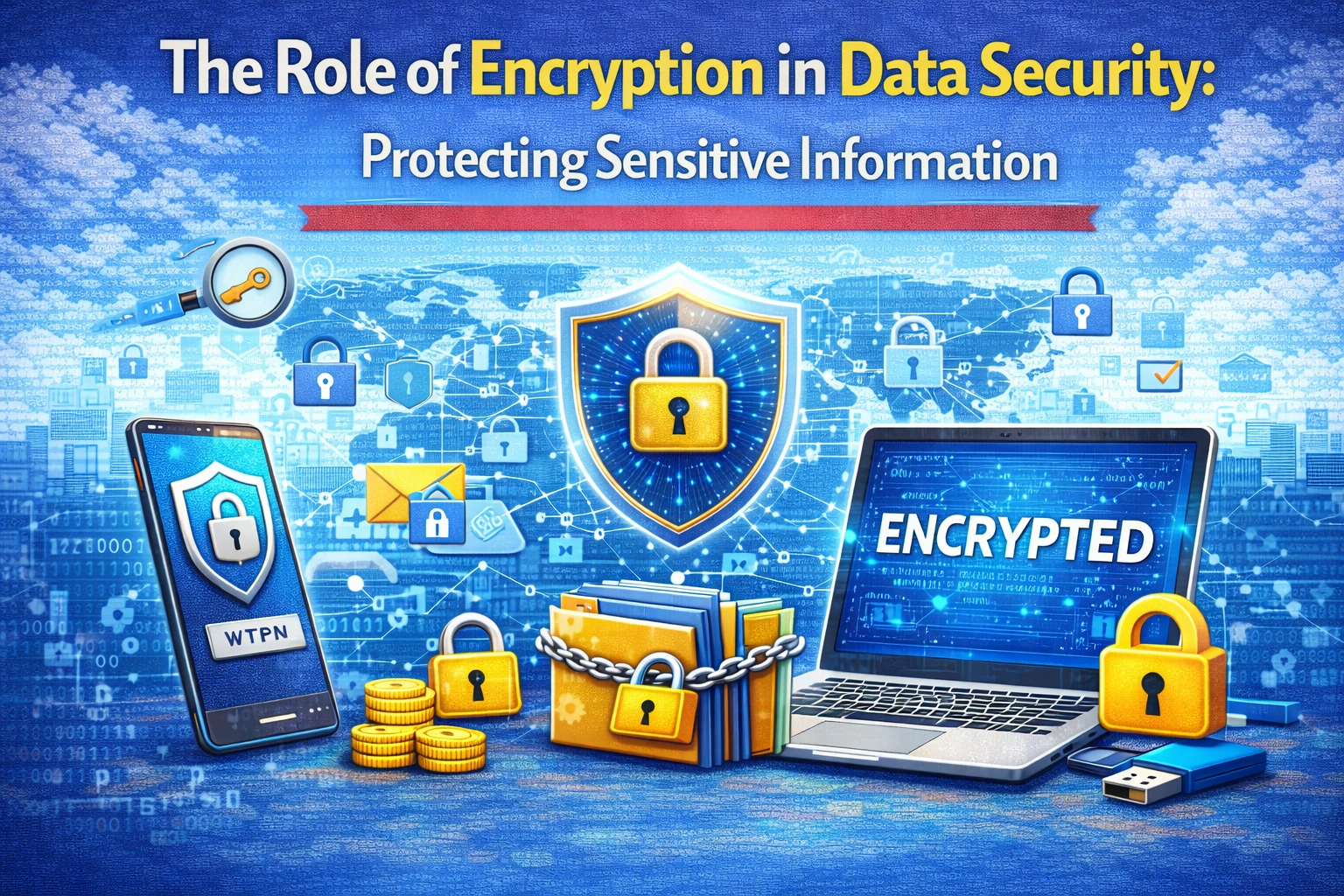

The Role of Encryption in Data Security: Protecting Sensitive Information
In the digital age, vast amounts of sensitive information are stored and transmitted through online systems. From financial transactions to personal communications, digital data is constantly moving across networks.
One of the most effective tools for protecting this information is encryption. Understanding the role of encryption in data security is essential for businesses and individuals who want to safeguard their digital data from cyber threats.
Encryption transforms readable information into coded data that can only be accessed by authorised users.
What Is Encryption?
Encryption is a cybersecurity technique that converts plain data into a coded format known as ciphertext.
Only users who possess the correct encryption key can decrypt and access the original information.
Encryption protects many types of data, including:
- Personal communications
- Financial transactions
- Business records
- Customer data
- Government information
Without encryption, sensitive data would be vulnerable to interception and misuse.
Why Encryption Is Important
Cybercriminals constantly attempt to intercept digital information. Encryption ensures that even if data is intercepted, it remains unreadable.
The role of encryption in data security includes:
- Protecting confidential information
- Preventing unauthorized access
- Securing online communications
- Maintaining data integrity
- Supporting regulatory compliance
Encryption plays a critical role in modern cybersecurity strategies.
Types of Encryption
Different encryption methods are used depending on the type of system or communication.
Symmetric Encryption
Symmetric encryption uses a single key to both encrypt and decrypt data.
It is commonly used for:
- Securing databases
- File encryption
- Internal data protection
This method is fast and efficient for large amounts of data.
Asymmetric Encryption
Asymmetric encryption uses two different keys:
- A public key for encryption
- A private key for decryption
This method is widely used in:
- Secure email systems
- Online transactions
- Digital certificates
It provides strong protection for internet communications.
Encryption in Everyday Digital Services
Encryption is used in many digital services that people rely on daily.
Examples include:
- Secure websites using HTTPS
- Online banking systems
- Messaging applications
- Cloud storage platforms
These services rely on encryption to protect user information.
Encryption for Businesses
Businesses must protect sensitive data such as customer records and financial information.
Encryption helps organisations:
- Secure confidential data
- Protect intellectual property
- Prevent data breaches
- Maintain customer trust
Many industries now require encryption as part of security compliance standards.
Encryption and Data Privacy
Encryption supports data privacy by ensuring personal information cannot be easily accessed by unauthorized parties.
This helps organisations comply with data protection regulations and demonstrate responsible data handling practices.
Strong encryption measures help maintain trust between businesses and their customers.
Challenges of Encryption
While encryption provides strong security benefits, it also presents certain challenges.
These may include:
- Managing encryption keys securely
- Ensuring compatibility with systems
- Balancing security with system performance
Proper encryption management is necessary to maintain effective security.
The Future of Encryption
As cyber threats evolve, encryption technologies will continue to improve.
Future developments may include:
- Advanced encryption algorithms
- Quantum-resistant encryption methods
- Enhanced security for cloud systems
Encryption will remain a core component of cybersecurity infrastructure.
FAQ
What is encryption in cybersecurity?
Encryption converts readable data into coded information that can only be accessed with a decryption key.
Why is encryption important?
Encryption protects sensitive information from unauthorized access and cyber threats.
Where is encryption used?
Encryption is used in secure websites, messaging apps, banking systems, and cloud storage platforms.
Can encryption prevent data breaches?
Encryption significantly reduces the risk of data exposure during cyber attacks.
Is encryption required for businesses?
Many industries require encryption to protect customer data and comply with privacy regulations.