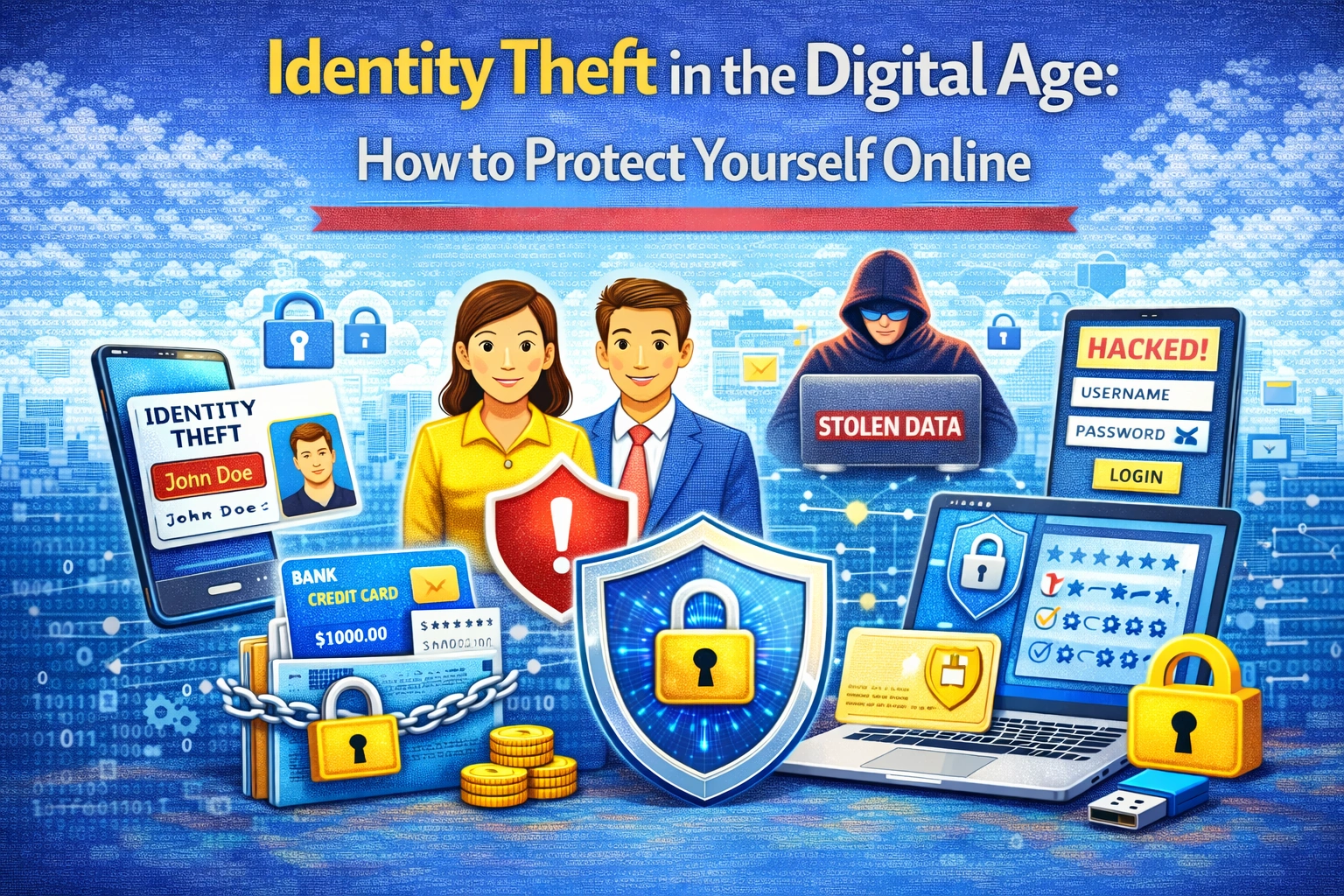

Identity Theft in the Digital Age: How to Protect Yourself Online
Identity theft has become one of the fastest-growing cybercrimes in the digital world. As more personal information is stored and shared online, cybercriminals are constantly looking for opportunities to steal sensitive data.
Understanding identity theft protection is essential for anyone who uses the internet for banking, shopping, communication, or work. Personal data such as financial information, login credentials, and identification numbers can be misused if they fall into the wrong hands.
By learning how identity theft occurs and how to prevent it, individuals can protect their digital identity and financial security.
What Is Identity Theft?
Identity theft occurs when someone uses another person’s personal information without permission to commit fraud or other illegal activities.
This stolen information may include:
Names and addresses
Credit card numbers
Social security or identification numbers
Login credentials
Bank account details
Once criminals gain access to this information, they may open fraudulent accounts, make purchases, or conduct financial transactions.
Common Ways Identity Theft Happens
Cybercriminals use various techniques to steal personal information.
Phishing Scams
Fraudulent emails or messages trick users into revealing personal information.
Data Breaches
Hackers gain access to company databases containing customer data.
Malware
Malicious software installed on devices can capture sensitive information.
Public Wi-Fi Networks
Unsecured networks allow attackers to intercept data transmissions.
Understanding these threats helps individuals stay alert.
Warning Signs of Identity Theft
Early detection can reduce the damage caused by identity theft.
Common warning signs include:
Unexpected financial transactions
Unfamiliar charges on credit cards
Accounts opened in your name
Emails about services you did not sign up for
Notifications about password changes you did not request
Recognising these signs allows victims to respond quickly.
How to Protect Yourself from Identity Theft
There are several effective steps individuals can take to protect their personal information.
Use Strong Passwords
Create complex passwords that are difficult to guess and avoid using the same password across multiple accounts.
Enable Multi-Factor Authentication
Multi-factor authentication adds another layer of security when accessing online accounts.
Monitor Financial Accounts
Regularly review bank statements and credit card transactions for suspicious activity.
Protect Personal Information
Avoid sharing sensitive personal details online or through unsecured communication channels.
Use Secure Internet Connections
Avoid accessing financial accounts on public Wi-Fi networks without a VPN.
The Role of Businesses in Preventing Identity Theft
Businesses that collect customer data must implement strong security measures.
Responsible organisations:
Encrypt sensitive data
Monitor systems for suspicious activity
Train employees in cybersecurity awareness
Comply with data protection regulations
Protecting customer information helps reduce identity theft risks.
What to Do If Your Identity Is Stolen
If identity theft occurs, immediate action is important.
Steps include:
Contact financial institutions immediately
Change passwords for affected accounts
Report fraudulent activity
Monitor credit reports for unusual activity
Secure compromised devices
Taking quick action can limit the impact of identity theft.
The Future of Identity Protection
As cyber threats continue to evolve, new security technologies are being developed to protect digital identities.
Emerging solutions include:
Biometric authentication
Artificial intelligence security systems
Identity verification technologies
Improved encryption methods
These advancements will help individuals and organisations strengthen digital identity protection.
FAQ
What is identity theft?
Identity theft occurs when someone steals personal information to commit fraud.
How can I protect myself from identity theft?
Use strong passwords, enable multi-factor authentication, and monitor financial accounts regularly.
Is identity theft common?
Yes. With increasing digital activity, identity theft has become more widespread.
Can identity theft happen through email?
Yes. Phishing emails are one of the most common methods used by cybercriminals.
What should I do if I suspect identity theft?
Contact your bank immediately and change passwords for all affected accounts.