
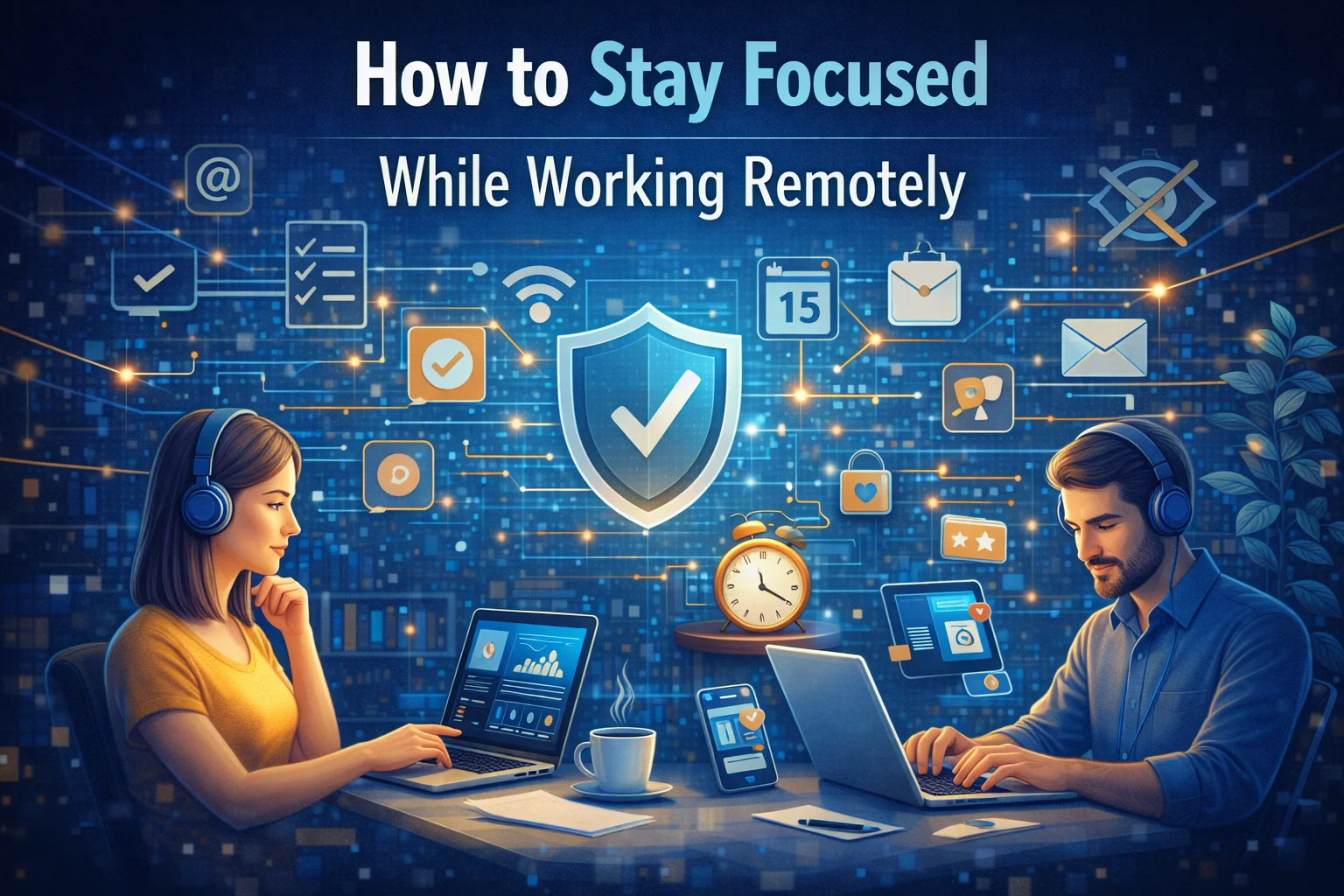

Remote work offers flexibility and freedom, but it also comes with unique challenges—especially when it comes to maintaining focus. Without the structure of a traditional office, distractions can easily interrupt workflow and reduce productivity. Learning how to stay focused while working remotely is essential for professionals who want to perform consistently and avoid burnout.
Focus in a remote environment is not about working longer hours; it’s about creating the right conditions for deep, meaningful work.
Why Focus Is Harder in Remote Work
Remote work blurs the boundaries between professional and personal life. Household responsibilities, digital notifications, and the absence of direct supervision can all impact concentration.
Common focus challenges include:
- Frequent interruptions at home
- Constant access to social media and messages
- Lack of routine or structure
- Mental fatigue from screen time
Understanding these challenges is the first step toward overcoming them.
Create a Dedicated Work Environment
One of the most effective ways to improve focus is by setting up a dedicated workspace. Even a small, defined area can signal to the brain that it’s time to work.
A focused workspace should:
- Be quiet and well-lit
- Be separate from relaxation areas if possible
- Contain only work-related items
A consistent environment helps reduce mental switching between tasks and roles.
Establish Clear Working Hours
Remote work flexibility can become a distraction if working hours are unclear. Setting defined start and end times creates structure and supports mental focus.
Clear working hours:
- Help build a daily rhythm
- Reduce procrastination
- Protect personal time
- Improve work-life balance
Sticking to a routine trains the mind to focus during designated work periods.
Prioritise Tasks and Set Daily Goals
Unclear priorities often lead to scattered attention. Starting the day with a clear plan improves focus and efficiency.
Effective goal-setting includes:
- Identifying the most important tasks
- Breaking large tasks into smaller steps
- Setting realistic daily targets
Clear goals reduce decision fatigue and keep attention directed toward meaningful work.
Use Focus Techniques to Reduce Distractions
Remote workers benefit from intentional focus techniques designed to limit interruptions.
Helpful techniques include:
- Working in focused time blocks with short breaks
- Silencing non-essential notifications
- Using website blockers during deep work sessions
- Keeping phones out of reach when possible
Reducing distractions allows the brain to stay engaged with tasks for longer periods.
Take Regular Breaks to Maintain Concentration
Working continuously without breaks reduces focus and increases mental fatigue. Short, planned breaks help refresh attention and maintain performance.
Effective breaks involve:
- Stepping away from screens
- Stretching or moving
- Getting fresh air
- Resetting mentally
Balanced work and rest cycles support sustained focus throughout the day.
Manage Digital Overload
Remote work often increases digital communication, which can overwhelm attention. Managing emails, messages, and notifications is critical for focus.
Strategies to reduce overload:
- Schedule specific times to check emails
- Avoid responding to messages instantly
- Use communication tools intentionally
Controlling digital inputs helps prevent constant task switching.
Maintain Physical and Mental Wellbeing
Focus is closely linked to overall wellbeing. Poor sleep, lack of movement, and stress can all reduce concentration.
Supporting wellbeing includes:
- Getting enough sleep
- Staying hydrated
- Moving regularly during the day
- Managing stress levels
Healthy habits strengthen mental clarity and focus.
Build a Focus-Friendly Remote Work Culture
For teams, focus improves when expectations are clear. Managers can support focus by encouraging reasonable workloads and respecting boundaries.
A supportive culture values:
- Outcome-based performance
- Clear communication
- Respect for focused work time
This environment empowers remote workers to stay engaged and productive.
Conclusion
Staying focused while working remotely requires intention, structure, and healthy habits. By creating a dedicated workspace, setting clear routines, managing distractions, and prioritizing wellbeing, remote professionals can maintain high levels of focus and productivity. In a flexible work environment, focus becomes a skill that improves with practice and consistency.
✨ For more expert insights on remote work, productivity strategies, and modern workplace habits, visit Almuhtadi Ventures and explore our in-depth guides and practical resources.