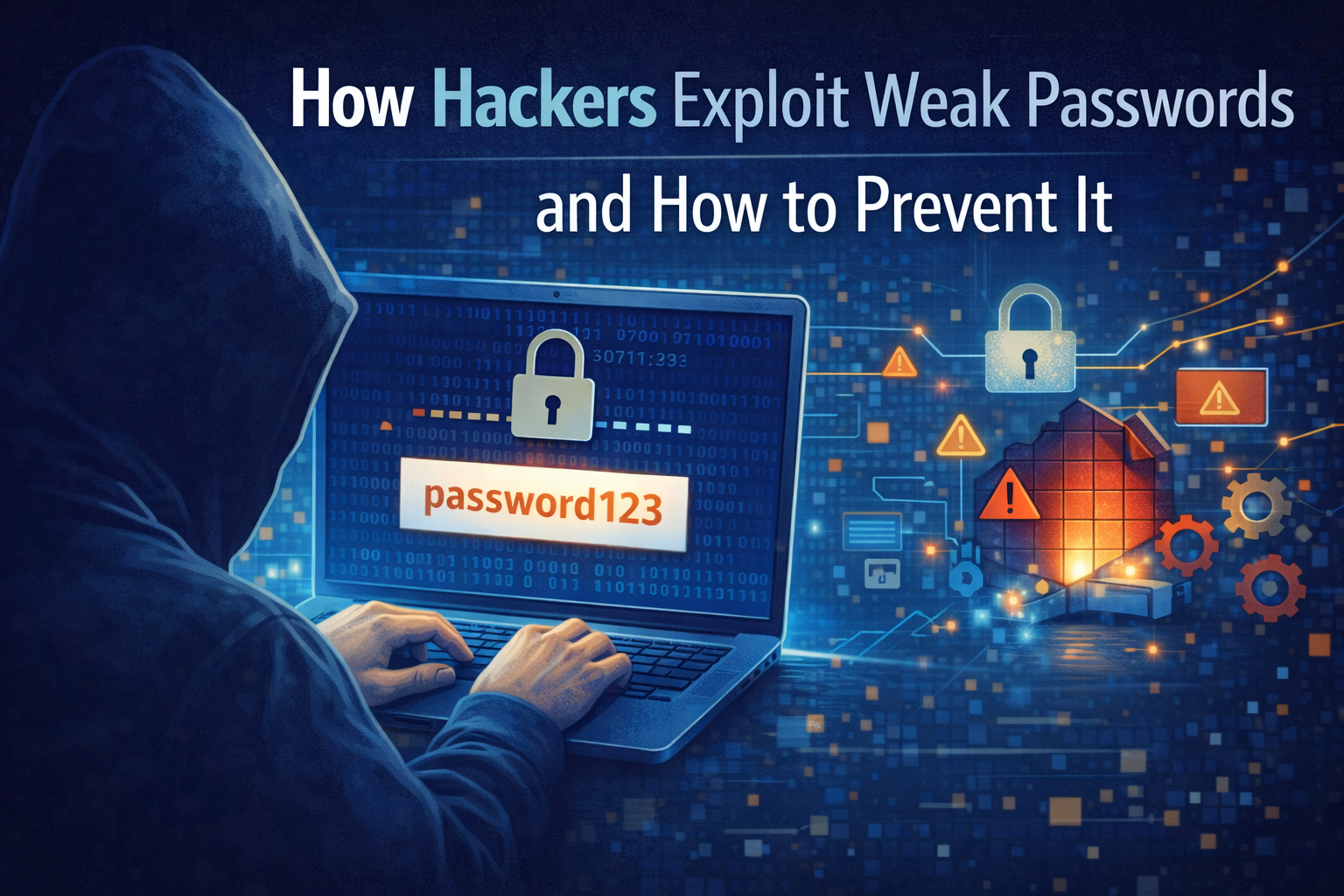

In today’s digital world, passwords are the first line of defence protecting personal and professional information. Unfortunately, weak passwords remain one of the most common reasons accounts get hacked. Cybercriminal actively search for easy targets, and poorly protected passwords make their job simple. Understanding how hackers exploit weak passwords and how to prevent it is essential for anyone who uses the internet.
Cybersecurity threats continue to evolve, but weak password practices remain one of the easiest entry points for attackers.
Why Weak Passwords Are a Major Security Risk
Many users underestimate the importance of strong passwords. Simple or reused passwords allow hackers to gain access without advanced tools or techniques.
Weak passwords increase risk because they:
- Are easy to guess
- Can be cracked using automated tools
- Are often reused across multiple accounts
- Provide access to sensitive personal or financial data
Once one account is compromised, attackers often try the same credentials on other platforms.
Common Ways Hackers Exploit Weak Passwords
Cybercriminal use several techniques to exploit weak passwords. These methods rely on predictable human behaviour rather than advanced hacking skills.
Brute Force Attacks
Brute force attacks use automated software to try thousands of password combinations until the correct one is found. Short and simple passwords are cracked quickly using this method.
Credential Stuffing
When a data breach exposes login details, hackers reuse those credentials across multiple platforms. If users reuse passwords, multiple accounts can be compromised at once.
Phishing Attacks
Hackers trick users into revealing passwords through fake emails, messages, or websites that look legitimate. Weak passwords combined with phishing make attacks even more successful.
Guessing Based on Personal Information
Passwords based on names, birthdays, or common words are easy to guess, especially if personal details are publicly available online.
Signs Your Passwords May Be Weak
Many users unknowingly follow poor password habits. Some warning signs include:
- Using the same password everywhere
- Short passwords with simple words
- Passwords based on personal details
- Rarely updating passwords
These habits significantly increase vulnerability to cyber attacks.
How to Create Strong and Secure Passwords
Preventing password-related attacks starts with creating strong credentials. A strong password is difficult for both humans and automated tools to guess.
Best practices include:
- Using a mix of uppercase and lowercase letters
- Including numbers and symbols
- Avoiding dictionary words or predictable patterns
- Making passwords long enough to resist cracking
Strong passwords reduce the success rate of automated attacks.
The Importance of Unique Passwords
Using the same password across multiple accounts is one of the biggest security mistakes. If one account is breached, others become immediately vulnerable.
Unique passwords ensure:
- One breach does not compromise everything
- Damage is limited if an account is hacked
- Better overall security across platforms
Each important account should have its own password.
How Two-Factor Authentication Adds Protection
Even strong passwords can be compromised. Two-factor authentication provides an additional layer of security by requiring a second verification step.
This extra step:
- Prevents unauthorised access
- Reduces the impact of stolen passwords
- Adds security for sensitive accounts
Enabling two-factor authentication is one of the most effective ways to protect accounts.
Avoiding Common Password Mistakes
Preventing password exploitation also means avoiding common errors such as:
- Sharing passwords with others
- Saving passwords in unsecured locations
- Ignoring security alerts
- Clicking suspicious links
Cybersecurity awareness helps users recognise and avoid risky behaviour.
Developing Better Password Habits
Good password security is not a one-time task. It requires consistency and awareness.
Strong habits include:
- Updating passwords periodically
- Reviewing account security settings
- Monitoring login alerts
- Staying informed about online threats
Consistent habits greatly reduce the risk of password-based attacks.
FAQs:
1. Why do hackers target weak passwords?
Hackers target weak passwords because they are easy to guess or crack using automated tools, allowing quick access to accounts.
2. How long does it take to crack a weak password?
Simple passwords can be cracked in seconds or minutes, while strong and complex passwords take significantly longer.
3. Is reusing passwords really dangerous?
Yes. If one account is breached, reused passwords allow hackers to access multiple accounts easily.
4. Does changing passwords regularly improve security?
Yes. Regular updates reduce the risk of long-term exposure if credentials are compromised.
5. Is two-factor authentication necessary if my password is strong?
Yes. Two-factor authentication provides extra protection even if a strong password is stolen or leaked.
Conclusion
Weak passwords remain one of the most exploited cybersecurity vulnerabilities. Hackers rely on predictable behaviour, reused credentials, and lack of awareness to gain access to accounts. By creating strong, unique passwords, enabling two-factor authentication, and practising good security habits, users can significantly reduce the risk of cyber attacks. In an increasingly digital world, password security is a responsibility everyone should take seriously.
✨ For more expert insights on cybersecurity, data protection, and digital safety, visit Almuhtadi Ventures and explore our in-depth guides and practical resources.