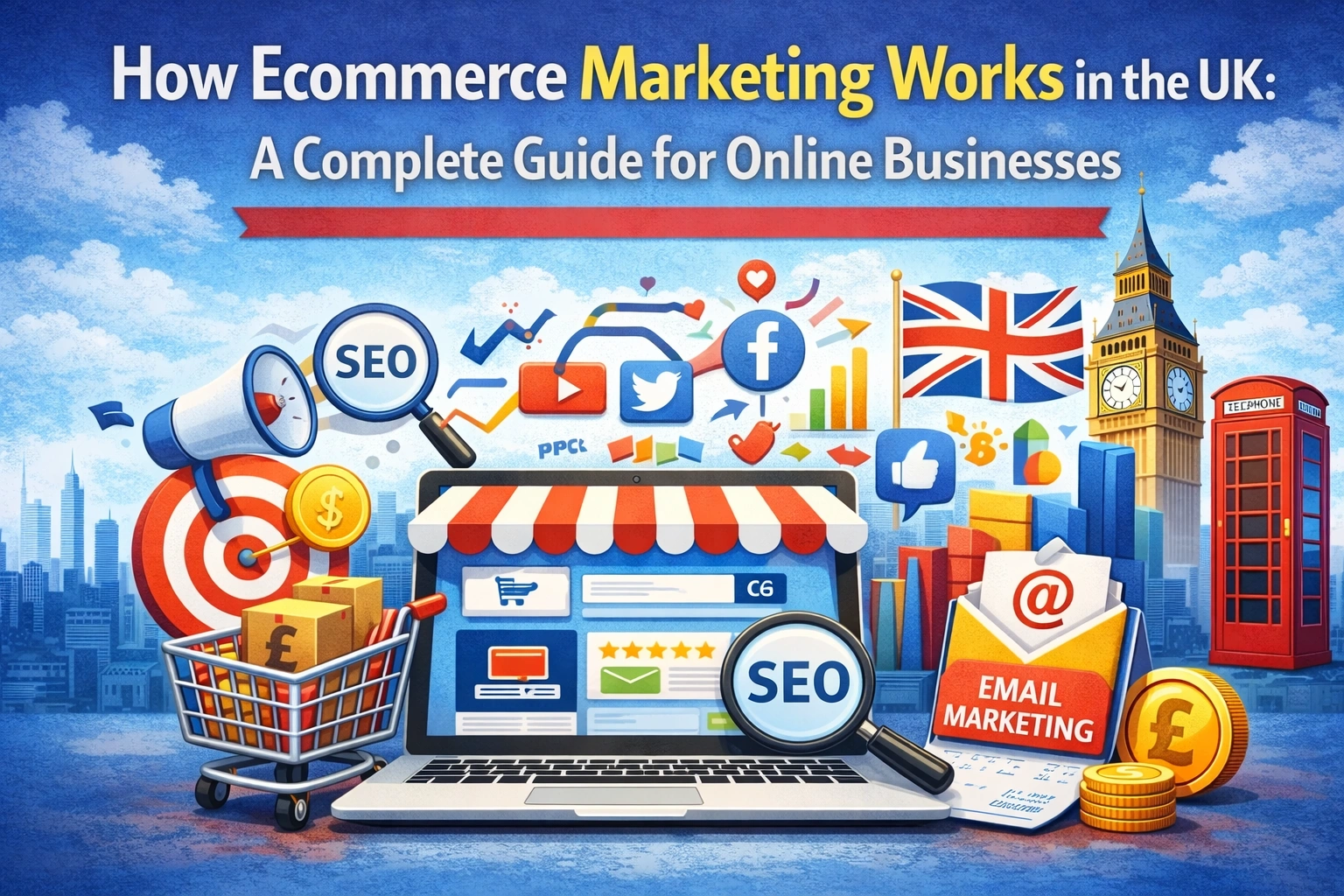

How Ecommerce Marketing Works in the UK: A Complete Guide for Online Businesses
The ecommerce industry in the United Kingdom continues to expand rapidly, creating new opportunities for businesses to reach customers online. Understanding how ecommerce marketing works in the UK is essential for companies aiming to grow their online stores and compete effectively in the digital marketplace.
Ecommerce marketing involves a combination of strategies designed to attract visitors, convert them into customers, and retain them for long-term growth.
This guide explains the core components of ecommerce marketing and how UK businesses can build successful online growth strategies.
The Ecommerce Landscape in the UK
The UK is one of the largest ecommerce markets in Europe. Consumers increasingly prefer online shopping due to:
- Convenience
- Competitive pricing
- Fast delivery options
- Mobile shopping accessibility
As a result, businesses must implement strong ecommerce marketing strategies to remain competitive.
Key Components of Ecommerce Marketing
Understanding how ecommerce marketing works in the UK requires examining the main channels businesses use to attract customers.
Search Engine Optimisation (SEO)
SEO helps ecommerce websites rank in search engines when customers search for products.
Optimised stores focus on:
- Product keyword optimisation
- Category page SEO
- Technical website performance
- Internal linking
SEO generates long-term organic traffic.
Paid Advertising Campaigns
Paid advertising provides immediate visibility for online stores.
Common platforms include:
- Google Ads
- Google Shopping
- Facebook and
- Instagram advertising
- TikTok ads
These campaigns target potential customers based on search behaviour and interests.
Social Media Marketing
Social media helps ecommerce brands build awareness and engage with customers.
Businesses use platforms to:
- Promote products
- Share brand stories
- Collaborate with influencers
- Launch promotional campaigns
Social media often drives discovery and brand loyalty.
Email Marketing
Email marketing remains one of the most effective ecommerce channels.
It supports:
- Abandoned cart recovery
- Customer retention
- Product promotions
- Personalised offers
Strong email strategies increase repeat purchases.
Conversion Rate Optimisation
Once traffic arrives at the website, conversion optimisation becomes critical.
Businesses improve conversions by:
- Optimising product pages
- Improving website speed
- Simplifying checkout processes
- Displaying customer reviews
Better user experience increases sales.
Customer Retention Strategies
Successful ecommerce businesses focus on long-term relationships.
Retention strategies include:
- Loyalty programmes
- Personalised recommendations
- Email follow-ups
- Exclusive promotions
Customer retention improves lifetime value.
Challenges in UK Ecommerce Marketing
Despite opportunities, UK ecommerce businesses face challenges such as:
- Rising advertising costs
- Intense market competition
- Logistics and delivery expectations
- Customer trust and security concerns
Strategic marketing helps overcome these obstacles.
Building an Effective Ecommerce Marketing System
To succeed in ecommerce marketing UK businesses should:
- Develop a clear marketing strategy
- Optimise website SEO
- Use paid advertising strategically
- Improve conversion performance
- Analyse marketing data regularly
Continuous optimisation is essential for growth.
Frequently Asked Questions (FAQ)
1. What is ecommerce marketing?
Ecommerce marketing promotes online stores through digital channels to drive traffic and sales.
2. Is SEO important for ecommerce stores?
Yes. SEO helps online stores attract organic traffic from search engines.
3. How long does ecommerce marketing take to work?
Paid campaigns produce faster results, while SEO takes longer but provides sustainable traffic.
4. Can small businesses compete in ecommerce?
Yes. With the right marketing strategy, niche businesses can compete effectively.
5. What is the most important ecommerce marketing channel?
Successful ecommerce businesses use multiple channels including SEO, advertising, and email marketing.