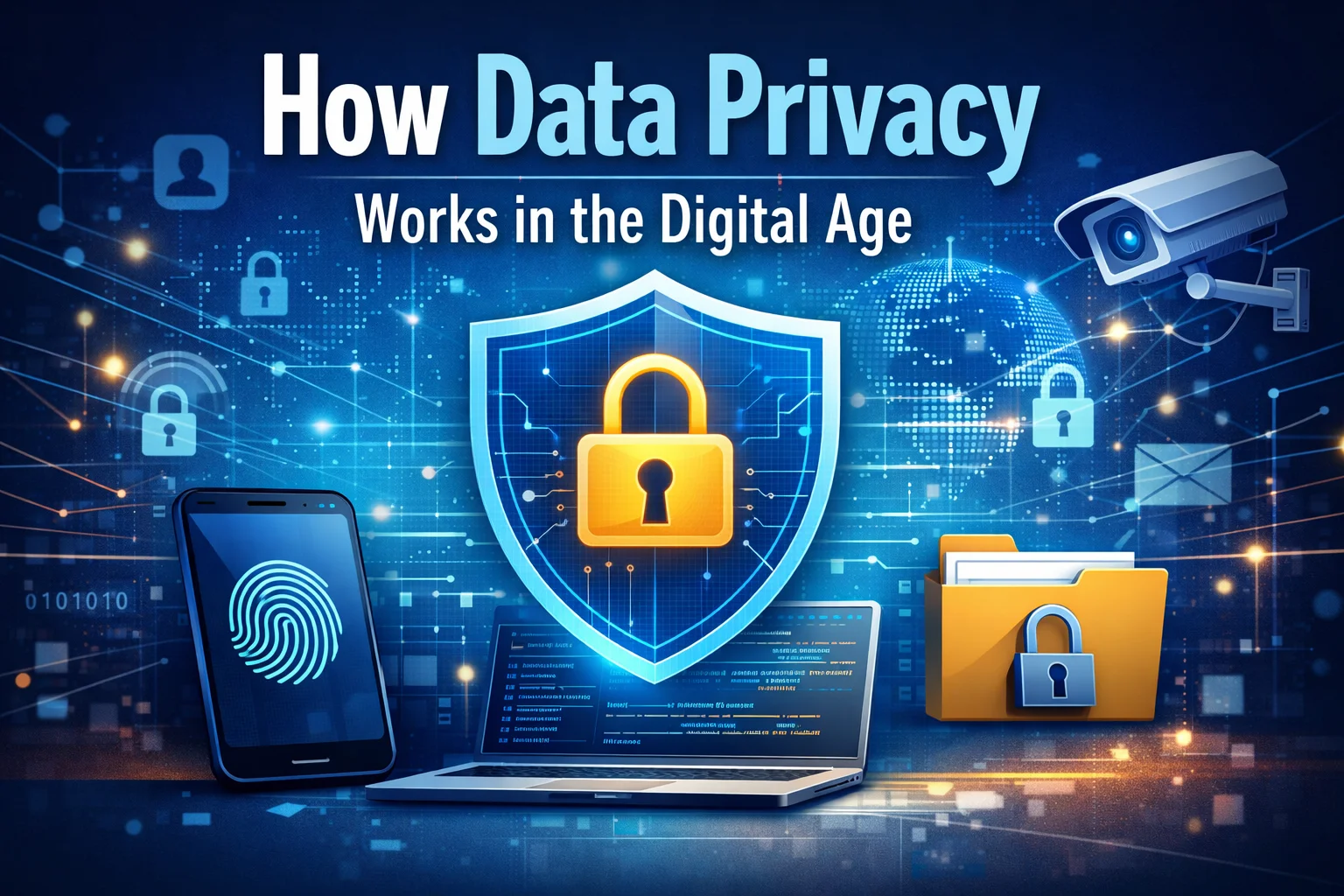

In today’s digital world, personal data is constantly being collected, shared, and stored. From online shopping and banking to social media and remote work tools, almost every digital interaction leaves a data trail. Understanding how data privacy works in the digital age is essential for individuals and businesses that want to stay safe, compliant, and in control of their information.
Data privacy is no longer just a technical issue. It directly affects trust, security, and how people interact with digital platforms on a daily basis.
What Is Data Privacy?
Data privacy refers to how personal information is collected, used, stored, and protected. Personal data can include names, email addresses, phone numbers, location data, financial details, and even online behavior.
In the digital age, data privacy focuses on ensuring that:
- Personal information is collected lawfully
- Data is used only for its intended purpose
- Individuals have control over their information
- Data is protected from unauthorized access
Strong data privacy practices help reduce misuse, fraud, and identity theft.
How Personal Data Is Collected Online
Most digital platforms collect data in multiple ways, often without users fully realizing it. Common methods include:
- Website forms and account registrations
- Cookies and tracking technologies
- Online purchases and payment systems
- Mobile apps and device permissions
- Social media interactions and preferences
This data helps organizations improve services, personalize experiences, and measure performance. However, without proper controls, it can also be exposed or misused.
How Data Is Used in the Digital Age
Once collected, data is used for various purposes, such as:
- Improving user experience
- Personalizing content and recommendations
- Marketing and advertising
- Analytics and performance tracking
- Fraud prevention and security monitoring
While many of these uses are legitimate, problems arise when data is used without transparency or shared with third parties without clear consent.
The Role of Consent and Transparency
Consent is a core principle of modern data privacy. Users should know:
- What data is being collected
- Why it is being collected
- How long it will be stored
- Who it will be shared with
Clear privacy notices, cookie banners, and permission settings allow users to make informed choices. Transparency builds trust and reduces the risk of privacy violations.
How Data Is Protected
Protecting personal data requires a combination of technical and organizational measures. Common data protection methods include:
- Encryption of sensitive information
- Secure servers and cloud infrastructure
- Access controls and authentication systems
- Regular software updates and security patches
- Monitoring for suspicious activity
These measures help prevent data breaches, leaks, and unauthorized access.
Common Data Privacy Risks
Despite increased awareness, data privacy risks remain common in the digital age. Some of the most frequent risks include:
- Weak passwords and reused credentials
- Phishing attacks that trick users into sharing data
- Unsecured public Wi-Fi connections
- Insecure apps and outdated software
- Data breaches caused by poor security practices
Many of these risks can be reduced through awareness and simple preventive actions.
Data Privacy for Individuals
For everyday users, data privacy is about control and awareness. Individuals can protect their privacy by:
- Reviewing app permissions regularly
- Using strong, unique passwords
- Being cautious with personal information shared online
- Avoiding suspicious links and downloads
- Keeping devices and software updated
Small habits play a big role in maintaining digital privacy.
Data Privacy for Businesses
Businesses handle large volumes of personal data and carry greater responsibility. Effective data privacy practices help businesses:
- Build customer trust
- Reduce legal and financial risks
- Prevent reputational damage
- Improve overall cybersecurity posture
Clear policies, staff training, and secure systems are essential for responsible data handling.
Why Data Privacy Matters More Than Ever
As digital services continue to expand, the value of personal data increases. Cybercriminal, advertisers, and even automated systems rely on data. Without proper privacy controls, individuals lose control over how their information is used.
In the digital age, data privacy is closely linked to digital rights, trust, and long-term online safety.
Conclusion
Data privacy in the digital age is about awareness, responsibility, and protection. Understanding how personal data is collected, used, and secured helps individuals make informed decisions and helps businesses operate responsibly. As digital interactions grow, strong data privacy practices are essential for maintaining trust, security, and control over personal information.
✨ For more in-depth guides on cybersecurity, data privacy, digital transformation, and modern online practices, visit Almuhtadi Ventures and explore our complete knowledge hub.