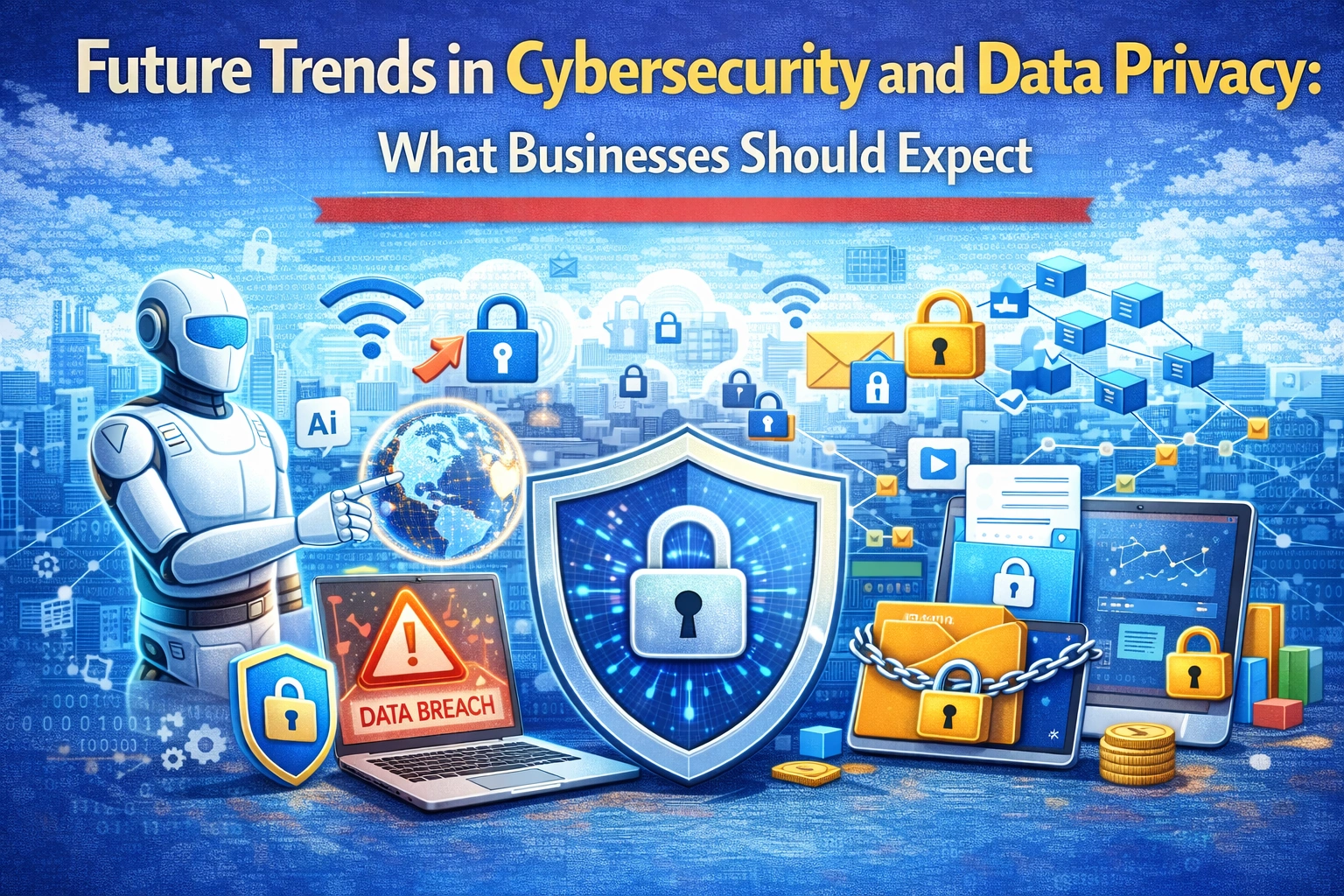

Future Trends in Cybersecurity and Data Privacy: What Businesses Should Expect
The digital landscape continues to evolve rapidly, bringing both innovation and new security challenges. As technology advances, organisations must adapt their cybersecurity strategies to protect sensitive information and digital systems.
Understanding future trends in cybersecurity and data privacy helps businesses prepare for emerging threats and strengthen their digital defences.
Cybersecurity is no longer just an IT issue; it has become a strategic priority for organisations worldwide.
The Growing Importance of Cybersecurity
As businesses rely more on digital technologies, cyber threats are becoming increasingly sophisticated.
Organisations today face risks such as:
- Advanced ransomware attacks
- Data breaches targeting sensitive information
- Identity theft and financial fraud
- Corporate espionage
These threats highlight the importance of investing in stronger cybersecurity frameworks.
Artificial Intelligence in Cybersecurity
Artificial intelligence (AI) is transforming how organisations detect and respond to cyber threats.
AI-powered systems can:
- Analyse large volumes of data
- Identify suspicious behaviour patterns
- Detect potential cyber attacks in real time
- Automate security responses
AI technologies allow organisations to respond to threats faster than traditional security systems.
Cloud Security Becomes a Priority
More companies are storing data in cloud environments. While cloud computing offers flexibility and scalability, it also introduces new security challenges.
Future cybersecurity strategies will focus on:
- Securing cloud infrastructure
- Protecting data stored on cloud platforms
- Monitoring access to cloud-based systems
Cloud security will remain a key focus area for businesses moving forward.
Zero Trust Security Models
Traditional security models often assumed that users inside a network could be trusted. Modern cybersecurity approaches are shifting toward Zero Trust principles.
Zero Trust security requires:
- Continuous verification of users
- Strict access controls
- Monitoring of all network activity
This model reduces the risk of internal and external threats.
Increasing Importance of Data Privacy Regulations
Governments around the world are strengthening data privacy regulations to protect consumer information.
Businesses must now comply with regulations that require them to:
- Handle personal data responsibly
- Inform customers how their data is used
- Protect sensitive information from cyber threats
Compliance with these regulations is becoming a major priority for organisations.
Cybersecurity for Remote and Hybrid Work
The rise of remote work has changed how companies approach cybersecurity.
Future security strategies must address:
- Remote access protection
- Secure communication tools
- Employee cybersecurity training
- Protection for distributed networks
Remote work environments require stronger security monitoring systems.
Internet of Things (IoT) Security
Connected devices such as smart home products, industrial sensors, and healthcare devices are increasing rapidly.
However, IoT devices often lack strong security protections.
Future cybersecurity solutions will focus on:
- Securing connected devices
- Monitoring IoT networks
- Preventing device-based cyber attacks
Protecting IoT infrastructure will become an important cybersecurity challenge.
Cybersecurity Awareness and Training
Technology alone cannot prevent cyber attacks. Human awareness remains essential.
Organisations must continue investing in:
- Employee cybersecurity training
- Phishing awareness programs
- Data protection education
A well-informed workforce helps reduce cyber risks.
Preparing for the Future of Cybersecurity
Businesses that want to remain secure in the digital age must adopt a proactive approach to cybersecurity.
Important steps include:
- Regular security assessments
- Continuous system monitoring
- Implementing advanced security technologies
Creating strong data protection policies
Organisations that prioritise cybersecurity will be better prepared to face emerging threats.
FAQ
Why are cybersecurity trends important for businesses?
Understanding trends helps organisations prepare for emerging cyber threats.
How will AI impact cybersecurity?
AI can detect threats faster and automate security responses.
What is Zero Trust security?
Zero Trust requires continuous verification of users and devices before granting access.
Why are data privacy regulations increasing?
Governments want to protect consumer information and prevent misuse of personal data.
What role does employee training play in cybersecurity?
Educated employees can identify threats such as phishing attacks and prevent security incidents.