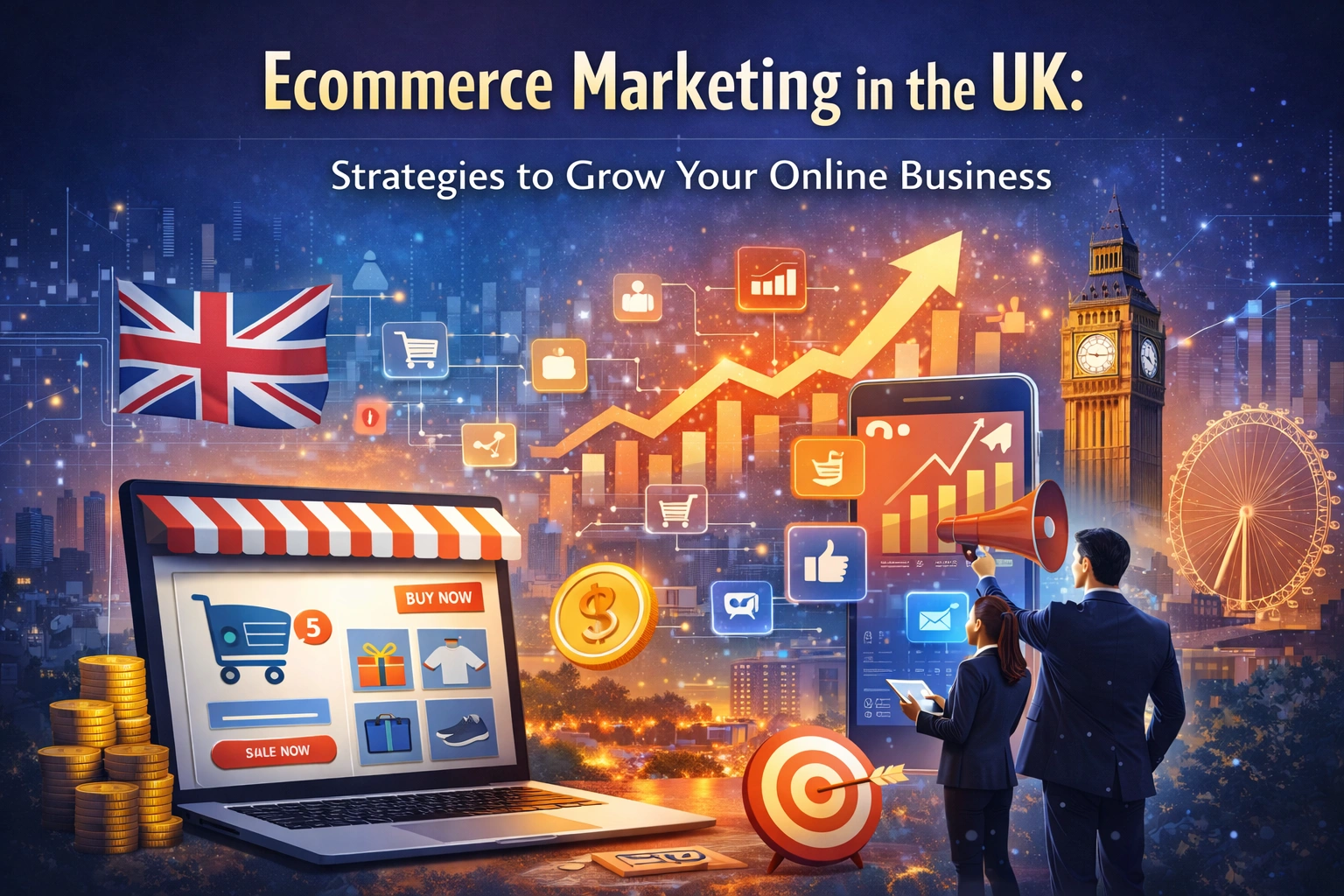

Ecommerce Marketing in the UK: Strategies to Grow Your Online Business
The UK ecommerce market is one of the most competitive and fast-growing digital sectors in Europe. Businesses operating online must adopt structured ecommerce marketing UK strategies to stand out, attract customers, and scale sustainably.
Ecommerce marketing involves more than advertising — it integrates SEO, paid campaigns, conversion optimisation, data analytics, and customer retention systems.
This pillar guide outlines the core strategies UK businesses use to grow successful online stores.
What Is Ecommerce Marketing?
Ecommerce marketing refers to the promotion of online stores through digital channels to increase:
- Website traffic
- Customer acquisition
- Conversion rates
- Customer lifetime value
- Brand visibility
It combines organic and paid digital tactics.
Why Ecommerce Marketing Is Critical in the UK
UK consumers are highly digital and price-sensitive.
Structured ecommerce marketing UK strategies help businesses:
- Compete with major marketplaces
- Build brand authority
- Improve search visibility
- Increase sales performance
- Reduce reliance on single traffic sources
Without marketing, even strong products struggle to scale.
Core Ecommerce Marketing Channels
1️⃣ Search Engine Optimisation (SEO)
Optimising product pages and category pages for search visibility increases organic traffic.
SEO helps ecommerce businesses rank for:
- Product keywords
- Buyer-intent searches
- Local UK queries
2️⃣ Paid Advertising (PPC)
Platforms such as:
- Google Ads
- Social media advertising
- Shopping campaigns
Paid traffic drives immediate visibility but requires strategic budgeting.
3️⃣ Email Marketing
Email remains one of the highest ROI channels.
It supports:
- Abandoned cart recovery
- Customer retention
- Promotions
- Product launches
4️⃣ Social Media Marketing
Platforms like Instagram, Facebook, and TikTok are powerful for:
- Brand awareness
- Community engagement
- Influencer collaborations
5️⃣ Conversion Rate Optimisation (CRO)
Driving traffic is not enough.
Ecommerce marketing UK businesses implement must focus on:
- Optimised product pages
- Clear calls-to-action
- Trust signals
- Secure checkout systems
Higher conversion rates improve profitability.
Common Ecommerce Marketing Challenges
UK ecommerce businesses often face:
- High competition
- Rising advertising costs
- Low conversion rates
- Cart abandonment
- Weak SEO foundations
A structured growth strategy is essential.
Building an Ecommerce Growth Strategy
To implement effective ecommerce marketing UK businesses should:
- Conduct market research
- Optimise website SEO
- Implement paid advertising campaigns
- Improve product page experience
- Monitor analytics and refine performance
Data-driven optimisation ensures sustainable growth.
Frequently Asked Questions (FAQ)
1. What is ecommerce marketing?
It involves promoting online stores using digital channels.
2. Is SEO important for ecommerce?
Yes. Organic traffic reduces dependency on paid ads.
3. How much does ecommerce marketing cost?
Costs vary depending on strategy and advertising budget.
4. Can small ecommerce stores compete?
Yes, with targeted marketing and niche positioning.
5. How long does it take to see results?
SEO may take months; paid campaigns can deliver quicker results.