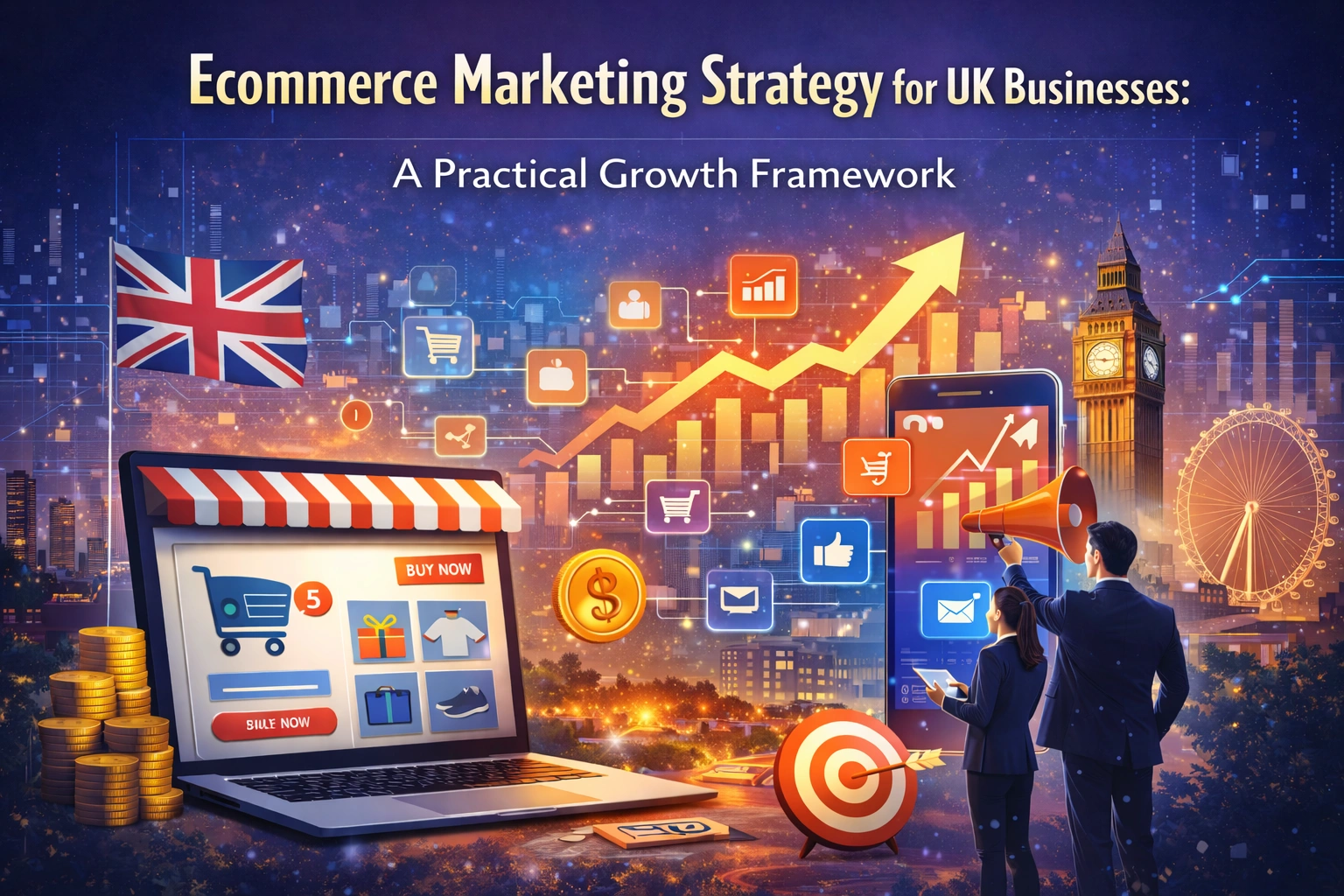

Launching an online store is only the first step. Sustainable success depends on implementing a structured ecommerce marketing strategy UK businesses can rely on to drive consistent traffic and sales.
With rising competition and increasing advertising costs, UK ecommerce brands must adopt a data-driven, multi-channel strategy that balances acquisition, conversion, and retention.
This guide outlines a practical framework for building a scalable ecommerce marketing strategy.
Why Strategy Matters in UK Ecommerce
The UK ecommerce market is mature and competitive. Businesses face:
- High advertising competition
- Informed and price-sensitive customers
- Established marketplace dominance
- Rapid shifts in digital trends
Without a clear ecommerce marketing strategy UK brands risk wasting budget on uncoordinated campaigns.
Define Your Target Audience
Understanding your audience improves marketing efficiency.
Identify:
- Demographics
- Buying behaviour
- Pain points
- Preferred platforms
- Purchase triggers
Clear targeting reduces wasted spend.
Build a Strong SEO Foundation
Search engine optimisation supports long-term growth.
Key areas include:
- Product keyword research
- Category page optimisation
- Technical SEO improvements
- Internal linking
- Mobile optimisation
Organic visibility reduces reliance on paid ads.
Use Paid Advertising Strategically
Paid campaigns help accelerate traffic.
Common channels in the UK include:
- Google Shopping
- Search Ads
- Social Media Ads
- Retargeting campaigns
The goal is to balance customer acquisition cost with lifetime value.
Optimise Conversion Rates
Driving traffic without optimising conversion is inefficient.
Improve:
- Product descriptions
- Page speed
- Checkout process
- Trust signals
- Reviews and testimonials
Conversion optimisation improves profitability.
Implement Email & Retention Marketing
Retention often delivers higher ROI than acquisition.
Use email marketing for:
- Abandoned cart recovery
- Product recommendations
- Loyalty programmes
- Seasonal promotions
Customer retention increases lifetime value.
Analyse and Refine Using Data
An effective ecommerce marketing strategy UK businesses use relies on analytics.
Track:
- Traffic sources
- Conversion rates
- Customer acquisition cost
- Revenue by channel
- Return on ad spend (ROAS)
Data-driven decisions improve scalability.
Common Mistakes UK Ecommerce Brands Make
- Over-reliance on paid ads
- Ignoring SEO
- Poor mobile optimisation
- Weak product content
- Lack of retention strategy
Balanced marketing improves resilience.
Building a Sustainable Growth Model
To maintain growth, UK ecommerce businesses should:
- Diversify traffic channels
- Invest in long-term SEO
- Continuously test advertising creatives
- Improve customer experience
- Monitor performance metrics
Structured strategy prevents stagnation.
Frequently Asked Questions (FAQ)
1. Is SEO or paid advertising more important?
Both are important. SEO supports long-term growth, while paid ads deliver immediate traffic.
2. How long does ecommerce SEO take?
Typically several months to see consistent results.
3. What is a healthy conversion rate?
It varies by industry, but optimisation is key regardless of baseline.
4. Should small ecommerce businesses use paid ads?
Yes, but with controlled budgets and clear targeting.
5. How often should strategy be reviewed?
Monthly performance reviews are recommended.