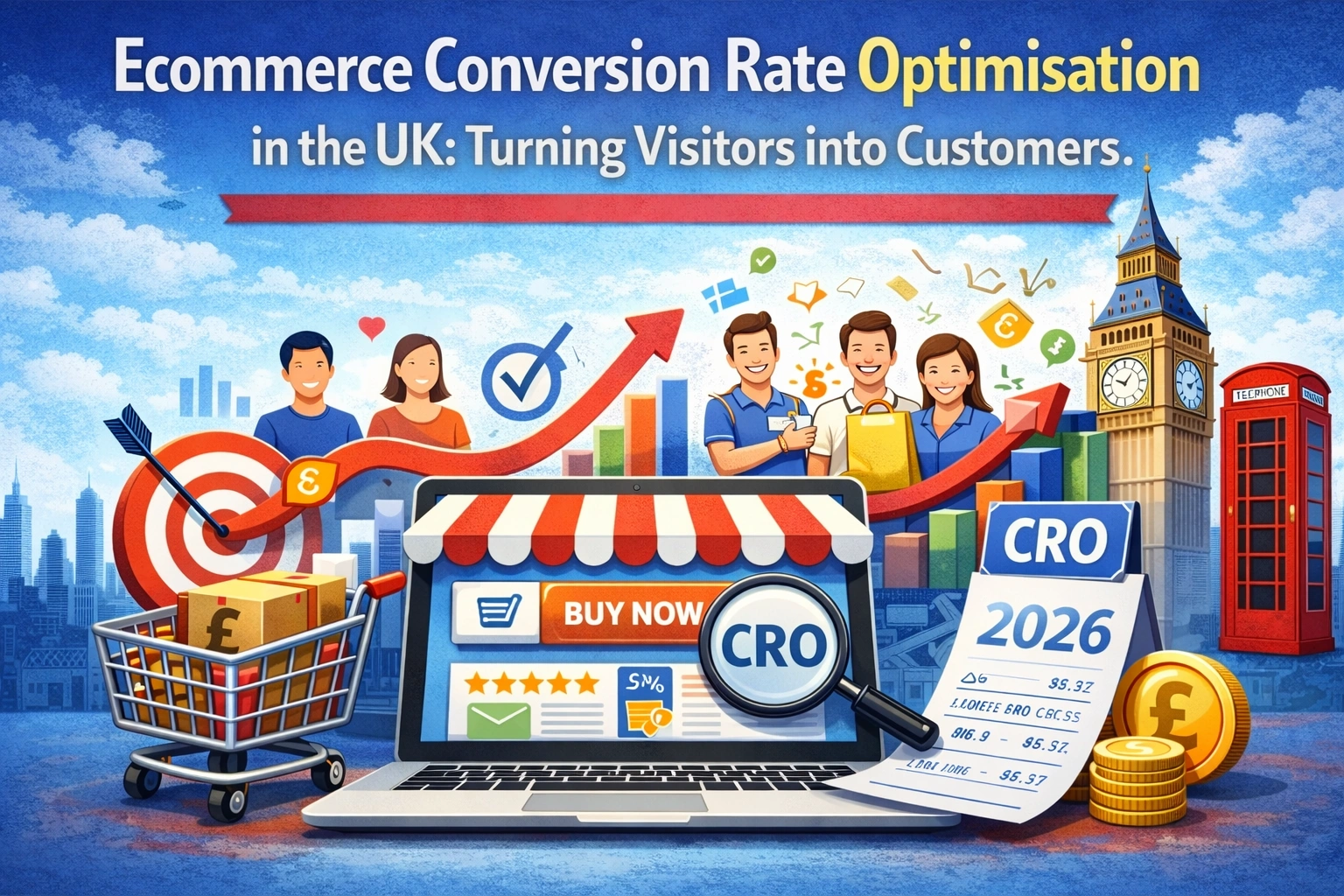

Ecommerce Conversion Rate Optimisation in the UK: Turning Visitors into Customers
Driving traffic to an online store is only half the challenge. The real growth opportunity lies in improving how many visitors actually become customers. Ecommerce conversion optimisation UK businesses implement focuses on improving website performance to maximise sales from existing traffic.
Even small improvements in conversion rate can significantly increase revenue without increasing marketing costs.
This guide explains the key strategies UK ecommerce stores use to improve conversion performance.
What Is Ecommerce Conversion Rate Optimisation?
Conversion rate optimisation (CRO) refers to improving website elements so that more visitors complete desired actions such as:
- Making a purchase
- Signing up for newsletters
- Adding products to cart
- Creating user accounts
CRO focuses on improving the customer journey.
Why Conversion Optimisation Matters
A well-optimised ecommerce store can:
- Increase revenue without increasing traffic
- Improve customer experience
- Reduce advertising costs per sale
- Build stronger trust with customers
Ecommerce conversion optimisation UK strategies help businesses maximise return on marketing investment.
Improve Website Speed
Page loading time directly affects user behaviour.
Slow websites often experience:
- Higher bounce rates
- Lower conversions
- Poor search rankings
Optimising images, hosting performance, and website code can improve speed.
Optimise Product Pages
Product pages are the most important conversion point.
High-performing pages typically include:
- Clear product images
- Detailed descriptions
- Customer reviews
- Transparent pricing
- Trust signals such as guarantees or certifications
Strong product presentation builds buyer confidence.
Simplify the Checkout Process
Complex checkout processes often lead to cart abandonment.
Optimisation techniques include:
- Guest checkout options
- Fewer form fields
- Multiple payment options
- Clear shipping information
A smoother checkout increases completed purchases.
Use Trust Signals
Customers are more likely to buy when they trust the store.
Common trust signals include:
- Secure payment badges
- Customer reviews
- Money-back guarantees
- Clear return policies
Trust reduces hesitation during purchase decisions.
Mobile Optimisation
A large percentage of UK ecommerce traffic comes from mobile devices.
Stores should ensure:
- Responsive website design
- Mobile-friendly navigation
- Fast loading product pages
- Simple checkout process on smartphones
Mobile usability strongly affects conversions.
Use Data to Improve Performance
Ecommerce conversion optimisation UK businesses use relies heavily on analytics.
Important metrics include:
- Conversion rate
- Cart abandonment rate
- Average order value
- Traffic source performance
Analysing these metrics helps identify improvement opportunities.
A/B Testing Website Elements
Testing different versions of website elements allows businesses to determine what works best.
Common test areas include:
- Product images
- Headlines
- Call-to-action buttons
- Pricing displays
Testing supports data-driven optimisation.
Common Conversion Optimisation Mistakes
Many ecommerce businesses struggle with conversions due to:
- Poor product content
- Confusing navigation
- Hidden shipping costs
- Lack of trust signals
- Slow website performance
Addressing these issues improves sales potential.
Building a Conversion-Focused Ecommerce Store
To improve conversions, UK ecommerce businesses should:
- Analyse user behaviour
- Optimise product pages
- Simplify checkout process
- Build trust through transparency
- Test and refine continuously
Conversion optimisation is an ongoing process.
Frequently Asked Questions (FAQ)
1. What is a good ecommerce conversion rate?
It varies by industry, but optimisation can improve performance regardless of starting point.
2. Does website speed affect conversions?
Yes. Faster websites typically convert better.
3. Should small online stores focus on CRO?
Yes. Even small improvements can increase revenue.
4. Is A/B testing necessary?
Testing helps identify what improves customer engagement.
5. Can CRO reduce advertising costs?
Yes. Higher conversion rates improve return on ad spend.