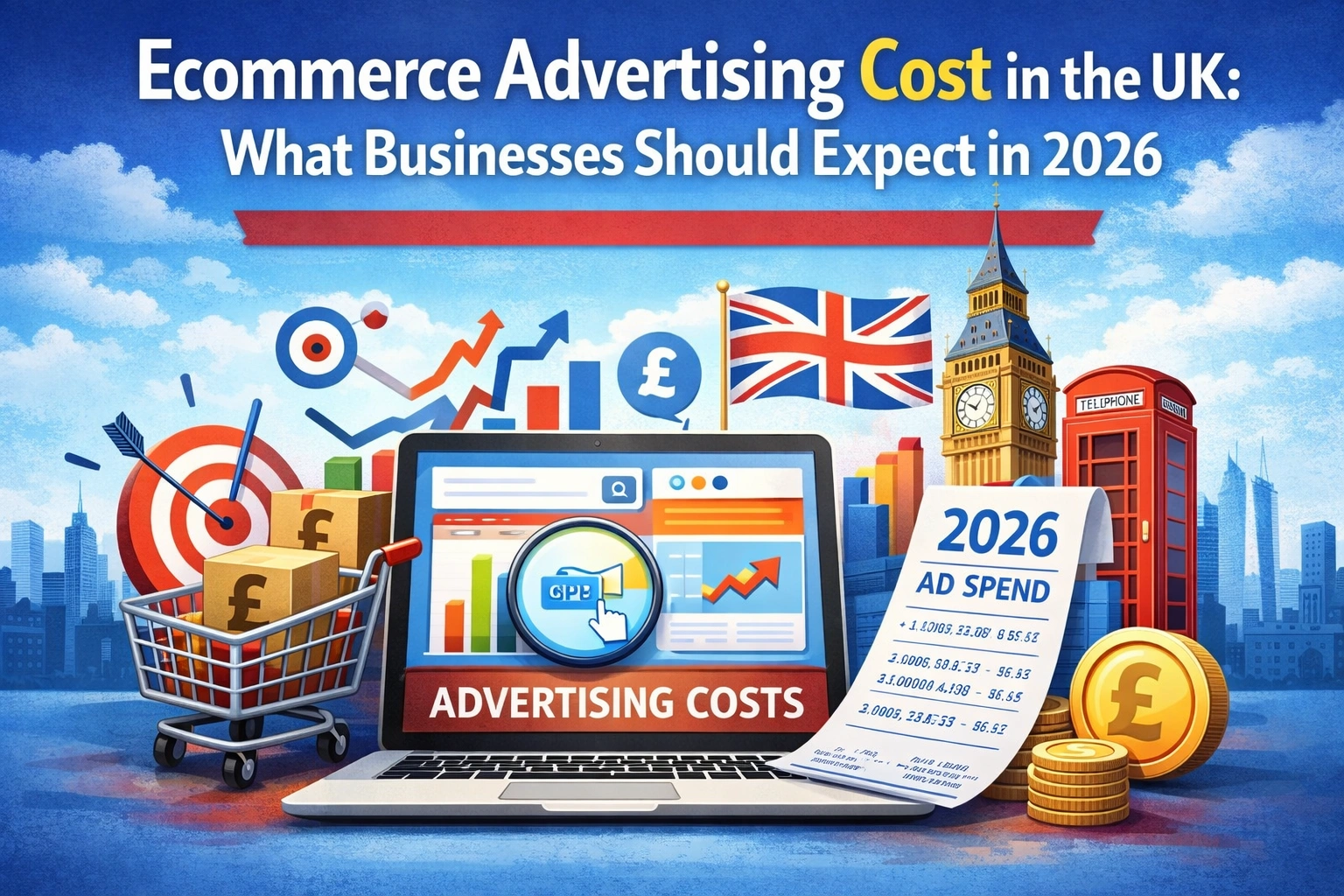

Ecommerce Advertising Cost in the UK: What Businesses Should Expect in 2026
Advertising plays a major role in driving traffic and sales for online stores. However, many businesses entering the digital marketplace want to understand the typical ecommerce advertising cost UK companies face before launching campaigns.
Advertising budgets vary depending on the industry, competition, and marketing strategy. Successful ecommerce brands treat advertising as an investment that generates measurable returns rather than simply a cost.
This guide explains the typical advertising costs for UK ecommerce businesses and how to optimise campaign performance.
Why Ecommerce Advertising Is Important
Even with strong SEO, paid advertising helps businesses:
- Generate immediate website traffic
- Promote new products quickly
- Reach targeted customer segments
- Compete with larger brands
- Scale online revenue
Paid campaigns are often a key part of ecommerce marketing UK strategies.
Major Ecommerce Advertising Channels
UK ecommerce businesses commonly invest in several digital advertising platforms.
Google Search Ads
Google Search Ads target customers actively searching for products.
Costs depend on:
- Keyword competition
- Industry demand
- Campaign quality score
Highly competitive keywords may have higher cost-per-click (CPC).
Google Shopping Ads
Shopping campaigns display product listings directly in search results.
These ads show:
- Product image
- Price
- Store name
- Product title
Shopping campaigns are widely used in ecommerce advertising UK strategies because they target high-intent buyers.
Social Media Advertising
Platforms such as:
- TikTok
- LinkedIn (for B2B)
allow businesses to target audiences based on demographics, interests, and behaviour.
Social media ads are effective for brand awareness and product discovery.
Retargeting Campaigns
Retargeting ads show advertisements to users who previously visited your website.
Benefits include:
- Higher conversion rates
- Lower acquisition costs
- Improved customer recall
Retargeting is one of the most efficient advertising techniques.
Factors That Influence Advertising Costs
Several factors affect ecommerce advertising cost UK businesses experience.
Industry Competition
Highly competitive industries often have higher advertising costs.
Target Audience
Narrow or premium audiences may require higher budgets.
Campaign Quality
Well-optimised campaigns reduce cost-per-click and improve performance.
Product Pricing
Higher-value products may support higher advertising budgets.
Typical Budget Ranges for UK Ecommerce Businesses
While costs vary, many ecommerce businesses allocate a percentage of revenue toward marketing.
Typical ranges include:
- Small ecommerce stores: modest starting budgets
- Growing businesses: moderate marketing investment
- Established brands: larger strategic advertising budgets
The key focus should be return on investment rather than spending level.
How to Optimise Advertising Spend
To control ecommerce advertising cost UK businesses should:
- Conduct keyword research before campaigns
- Use conversion tracking
- Test multiple ad creatives
- Optimise landing pages
- Analyse campaign data regularly
Continuous optimisation improves performance.
Combining Advertising with SEO
Successful ecommerce marketing rarely relies on a single traffic source.
Combining paid advertising with organic SEO provides:
- Immediate traffic from ads
- Long-term traffic from search engines
- Balanced marketing strategy
Diversification reduces risk.
Frequently Asked Questions (FAQ)
1. How much do UK ecommerce businesses spend on advertising?
Budgets vary depending on size, industry, and growth stage.
2. Is Google Ads better than social media ads?
Both serve different purposes. Google captures demand, while social media creates demand.
3. Can small ecommerce stores run effective campaigns?
Yes, with targeted keywords and controlled budgets.
4. How quickly do advertising campaigns generate results?
Paid campaigns can generate traffic immediately after launch.
5. Is retargeting important for ecommerce?
Yes. Retargeting often improves conversion rates significantly.