
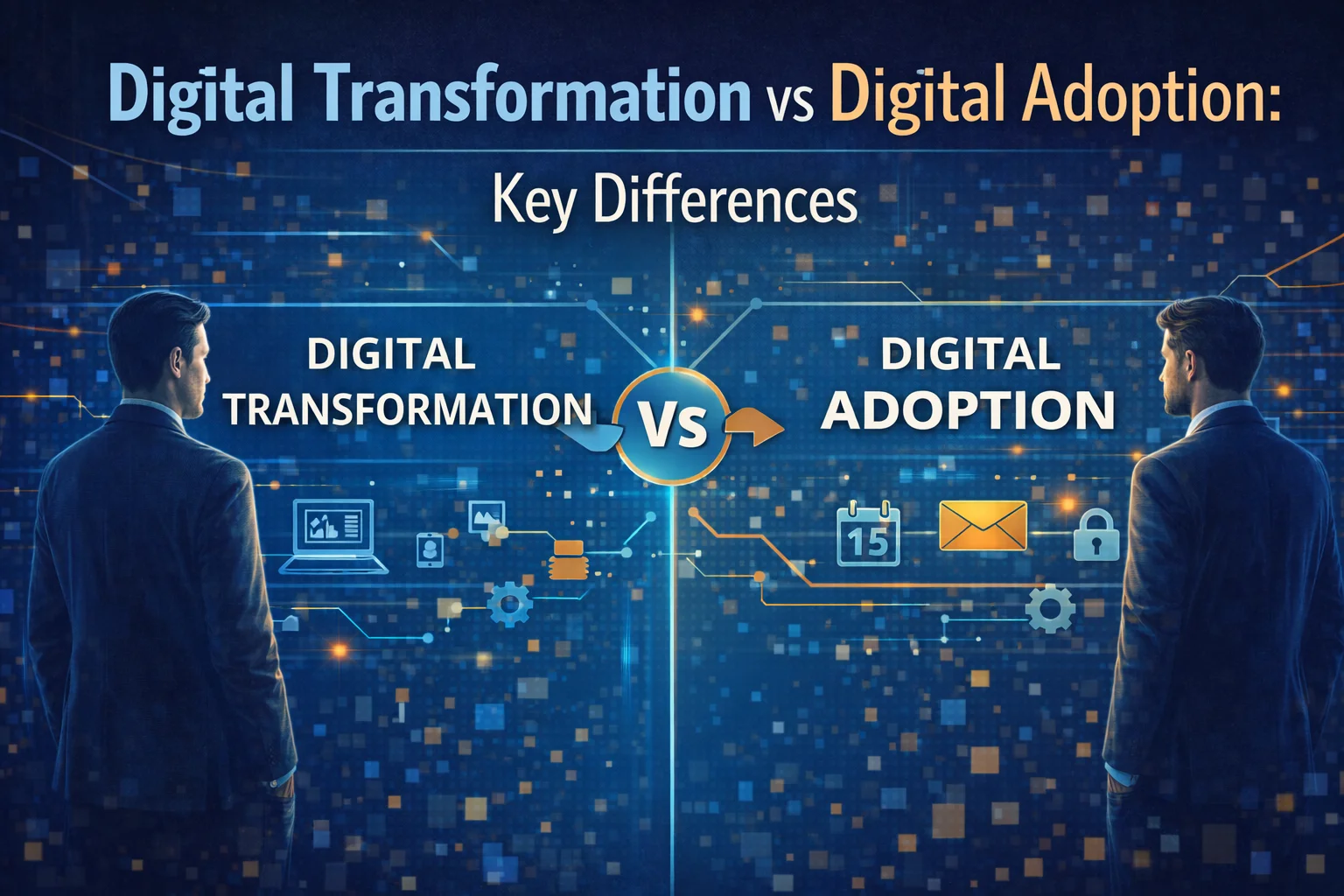

As businesses increasingly rely on technology to remain competitive, the terms digital transformation and digital adoption are often used interchangeably. While they are closely related, they are not the same. Understanding the difference between digital transformation and digital adoption is essential for organisations aiming to modernise operations, improve efficiency, and achieve sustainable growth.
Confusing these two concepts can lead to ineffective strategies, wasted investments, and missed opportunities.
Understanding Digital Transformation
Digital transformation refers to a broad, strategic shift in how a business operates, delivers value, and competes in a digital-first environment. It goes beyond technology upgrades and focuses on rethinking processes, culture, and business models.
Digital transformation typically involves:
- Redesigning business processes
- Integrating digital technologies across departments
- Using data to drive decision-making
- Changing organisational culture and mindset
It is a long-term, organisation-wide initiative that reshapes how a business functions at its core.
What Is Digital Adoption?
Digital adoption focuses on how effectively individuals and teams use digital tools and technologies that have already been implemented. It is about ensuring that employees, customers, or users fully understand and utilise digital systems to their full potential.
Digital adoption includes:
- Training users on new tools
- Encouraging consistent usage
- Reducing resistance to change
- Improving user confidence and efficiency
Without adoption, even the best digital tools fail to deliver value.
The Key Difference Between Transformation and Adoption
The primary difference lies in scope and purpose.
- Digital transformation is about what changes and why
- Digital adoption is about how those changes are used in practice
Transformation focuses on strategic change, while adoption focuses on execution and usability.
Why Digital Transformation Requires Digital Adoption
Digital transformation cannot succeed without digital adoption. Introducing new systems without ensuring people can use them effectively leads to inefficiency and frustration.
Successful transformation depends on:
- Employees embracing new workflows
- Teams using digital tools correctly
- Leadership supporting change
- Continuous learning and improvement
Digital adoption turns transformation plans into real, measurable results.
Examples of Digital Transformation
Examples of digital transformation include:
- Automating core business operations
- Shifting from manual to cloud-based systems
- Using data analytics for strategic planning
- Implementing digital customer experiences
These changes affect how the business operates at every level.
Examples of Digital Adoption
Digital adoption examples focus on usage rather than strategy:
- Employees learning to use new software efficiently
- Customers navigating digital platforms with ease
- Teams integrating tools into daily workflows
Adoption ensures that digital investments deliver value rather than becoming underused resources.
Common Mistakes Businesses Make
Many organisations focus heavily on transformation but neglect adoption. This often results in:
- Low employee engagement
- Underutilised tools
- Poor return on investment
- Resistance to change
Others focus only on adoption without a clear transformation strategy, leading to isolated improvements rather than long-term progress.
How Businesses Can Balance Both
A successful digital strategy requires alignment between transformation and adoption.
Best practices include:
- Setting clear transformation goals
- Providing ongoing training and support
- Communicating the purpose behind change
- Measuring adoption and performance regularly
When both elements work together, businesses achieve stronger outcomes.
The Role of Leadership and Culture
Leadership plays a critical role in bridging transformation and adoption. A supportive culture encourages experimentation, learning, and adaptation.
Effective leaders:
- Promote digital confidence
- Encourage feedback
- Support continuous improvement
Culture determines whether digital initiatives succeed or fail.
FAQs:
1. Is digital transformation the same as digital adoption?
No. Digital transformation focuses on strategic change across the organisation, while digital adoption focuses on how effectively people use digital tools.
2. Can a business adopt digital tools without digital transformation?
Yes, but without transformation, adoption may only deliver limited improvements rather than long-term efficiency or growth.
3. Why do digital transformation projects fail?
Many fail due to lack of digital adoption, poor communication, resistance to change, or insufficient training.
4. Which is more important: digital transformation or digital adoption?
Both are equally important. Transformation sets the direction, and adoption ensures successful execution.
5. How can businesses improve digital adoption?
Businesses can improve adoption through training, user support, clear communication, and leadership involvement.
Conclusion
Digital transformation and digital adoption serve different but complementary purposes. Transformation defines how a business evolves in a digital world, while adoption ensures people can successfully use the tools that enable that change. Businesses that understand and balance both concepts are better positioned to improve efficiency, reduce resistance, and achieve sustainable growth. True digital success comes from combining strategic vision with practical execution.
✨ For more expert insights on digital transformation, technology adoption, and modern business strategies, visit Almuhtadi Ventures and explore our in-depth guides and practical resources.