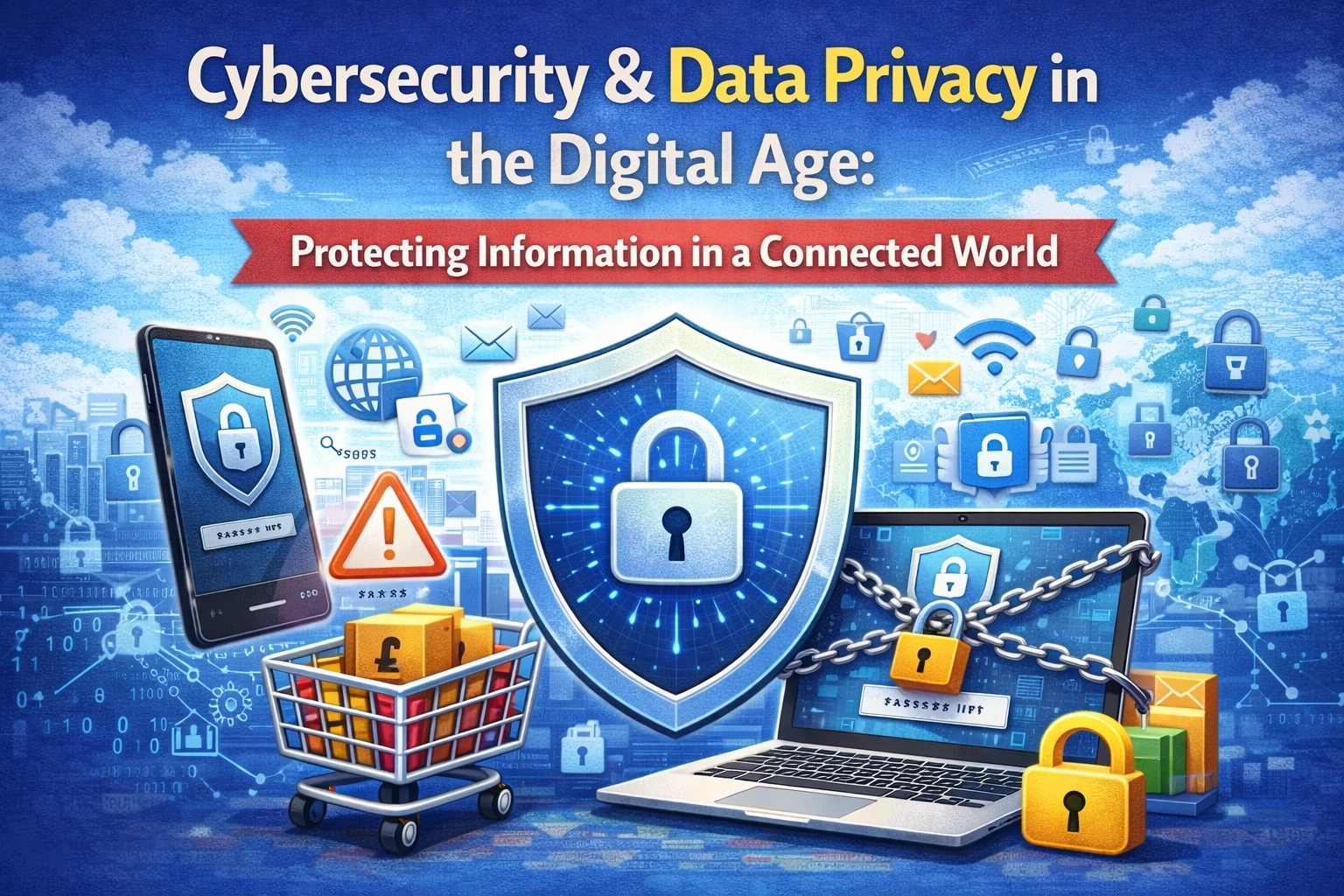

Cybersecurity & Data Privacy in the Digital Age: Protecting Information in a Connected World
The rapid growth of digital technology has transformed how individuals and businesses operate. From online banking to cloud storage and remote work systems, digital platforms now store vast amounts of personal and business data.
As technology evolves, so do cyber threats. This makes cybersecurity and data privacy in the digital age more important than ever. Protecting sensitive information is not only a technical responsibility but also a critical requirement for maintaining trust in the digital economy.
Businesses, governments, and individuals must adopt strong security practices to prevent data breaches, identity theft, and cybercrime.
The Rise of the Digital Economy
The modern digital economy relies heavily on data. Businesses collect information such as:
- Customer personal details
- Payment information
- Behavioural data
- Business intelligence
- Communication records
While data enables innovation and improved services, it also creates significant security risks if not protected properly.
Cybersecurity and data privacy strategies help organisations safeguard this valuable information.
What Is Cybersecurity?
Cybersecurity refers to the technologies, policies, and practices used to protect digital systems, networks, and data from cyber threats.
Cybersecurity aims to prevent:
- Unauthorised access
- Data breaches
- Malware attacks
- Phishing attempts
- Ransomware incidents
Effective cybersecurity frameworks ensure that systems remain secure and operational.
Understanding Data Privacy
Data privacy focuses on protecting personal information and ensuring that organisations collect, store, and process data responsibly.
Key principles of data privacy include:
- Transparency in data collection
- Limiting unnecessary data storage
- Protecting user rights
- Secure handling of sensitive information
Strong data privacy policies help build trust between businesses and their customers.
Why Cybersecurity and Data Privacy Matter Today
In the digital age, cyber threats are becoming increasingly sophisticated. Businesses and individuals face risks such as:
- Identity theft
- Financial fraud
- Corporate espionage
- Data breaches
- Reputation damage
Cybersecurity and data privacy in the digital age are essential for preventing these threats and protecting digital infrastructure.
Common Cybersecurity Threats
Several types of cyber threats are commonly seen across industries.
Phishing Attacks
Cybercriminals send fraudulent emails or messages designed to steal login credentials or financial information.
Ransomware
Malicious software locks systems or data until a ransom payment is made.
Malware
Software designed to damage or infiltrate computer systems.
Data Breaches
Unauthorised access to sensitive information stored by organisations.
Understanding these threats helps organisations strengthen their security systems.
Best Practices for Cybersecurity
To improve cybersecurity and data privacy in the digital age, organisations should adopt several best practices:
Use strong password policies
Implement multi-factor authentication
Regularly update software and systems
Train employees in cybersecurity awareness
Encrypt sensitive data
Conduct regular security audits
Preventative measures reduce the likelihood of cyber incidents.
The Role of Governments and Regulations
Many countries have introduced regulations to protect digital privacy.
Examples include:
- Data protection laws
- Cybersecurity standards
- Consumer privacy rights
- Security compliance requirements
These frameworks encourage organisations to handle data responsibly and protect consumer information.
The Future of Cybersecurity and Data Privacy
As digital technologies continue to evolve, cybersecurity will remain a critical challenge.
Emerging technologies such as artificial intelligence, cloud computing, and the Internet of Things (IoT) introduce both opportunities and new security risks.
Businesses must continue investing in cybersecurity infrastructure and data privacy policies to adapt to future threats.
FAQ
What is cybersecurity?
Cybersecurity involves protecting computer systems, networks, and data from cyber attacks.
Why is data privacy important?
Data privacy ensures personal information is collected and used responsibly.
What are the most common cyber threats?
Common threats include phishing, ransomware, malware, and data breaches.
How can businesses improve cybersecurity?
Businesses can implement security software, train employees, and adopt strong password policies.
Is cybersecurity important for small businesses?
Yes. Small businesses are often targeted because they may have weaker security systems.