
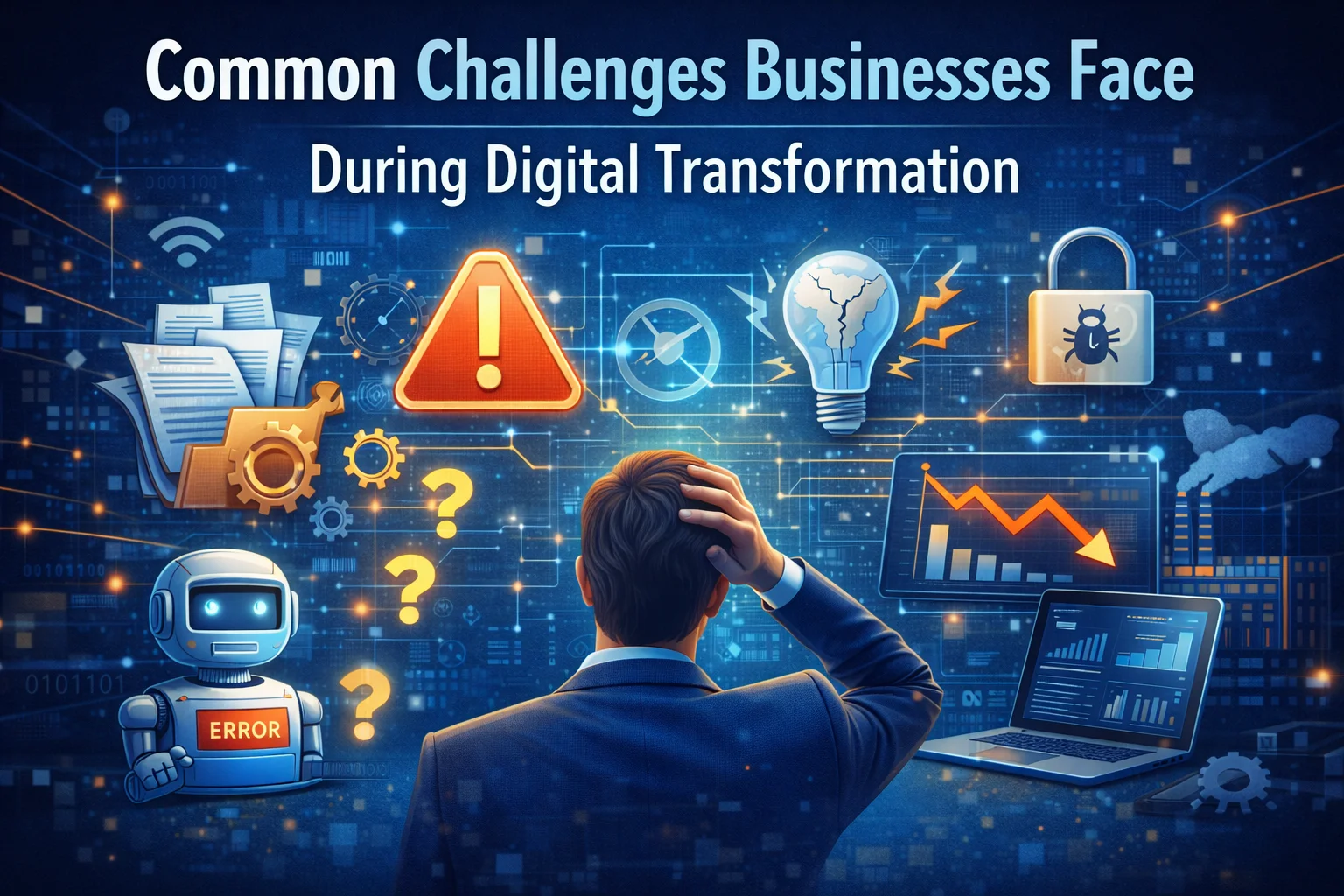

Digital transformation offers clear benefits, from improved efficiency to better customer experiences. However, the journey toward transformation is rarely simple. Many businesses struggle not because technology is unavailable, but because transformation requires changes in mindset, processes, and organisational structure. Understanding the common challenges businesses face during digital transformation helps organisations prepare, reduce risk, and improve their chances of success.
Digital transformation is as much about people and strategy as it is about technology.
Lack of Clear Strategy and Vision
One of the most common challenges is the absence of a clear transformation strategy. Businesses may adopt new tools without fully understanding how they support long-term goals.
Without a defined vision:
- Technology investments become fragmented
- Teams lack direction and alignment
- Results are difficult to measure
- Transformation efforts lose momentum
A successful digital transformation starts with clear objectives, defined outcomes, and a roadmap that aligns technology with business goals.
Resistance to Change Within the Organisation
Change is often met with resistance, especially when employees feel uncertain about new systems or workflows. Resistance can slow progress and limit adoption.
Common causes of resistance include:
- Fear of job displacement
- Lack of understanding of new technologies
- Comfort with existing processes
- Poor communication from leadership
Addressing resistance requires transparency, training, and involving employees early in the transformation process.
Skills and Knowledge Gaps
Digital transformation often introduces technologies that existing teams are unfamiliar with. Without the right skills, businesses struggle to implement and manage new systems effectively.
Skills-related challenges include:
- Limited digital literacy
- Shortage of specialised expertise
- Insufficient training programs
- Overreliance on external support
Upskilling employees and investing in continuous learning are essential for sustainable transformation.
Integration with Legacy Systems
Many businesses rely on legacy systems that were not designed to integrate with modern digital platforms. These outdated systems can limit flexibility and slow transformation efforts.
Legacy system challenges include:
- Compatibility issues
- High maintenance costs
- Data silos
- Limited scalability
Modernising or gradually replacing legacy systems is often necessary, but it requires careful planning to avoid disruption.
Data Management and Quality Issues
Digital transformation relies heavily on data. However, poor data quality and fragmented data systems can undermine decision-making and performance.
Common data challenges include:
- Inconsistent data formats
- Inaccurate or outdated information
- Limited data accessibility
- Weak data governance
Improving data management practices is critical to gaining value from digital tools and analytics.
Cybersecurity and Data Privacy Concerns
As businesses adopt more digital systems, exposure to cyber risks increases. Security concerns can delay transformation or lead to costly incidents if not addressed properly.
Cybersecurity challenges include:
- Increased attack surfaces
- Insufficient security controls
- Lack of employee awareness
- Compliance and privacy risks
Security should be integrated into transformation plans from the beginning rather than treated as an afterthought.
Budget Constraints and Cost Management
Digital transformation often requires upfront investment in technology, training, and infrastructure. Budget limitations can restrict progress or force businesses to compromise on quality.
Cost-related challenges include:
- Underestimating total transformation costs
- Poor prioritisation of investments
- Short-term budget planning
Businesses that view digital transformation as a long-term investment rather than a one-time expense are better positioned to manage costs effectively.
Measuring Success and ROI
Many organisations struggle to measure the success of digital transformation initiatives. Without clear metrics, it becomes difficult to justify investment or identify areas for improvement.
Measurement challenges include:
- Lack of defined performance indicators
- Focusing only on short-term results
- Difficulty linking technology to outcomes
Establishing measurable goals helps track progress and ensures transformation efforts deliver real value.
Leadership and Cultural Challenges
Strong leadership is essential for digital transformation. Without leadership support, initiatives often stall or fail to gain organisation-wide acceptance.
Leadership challenges include:
- Inconsistent support from senior management
- Lack of accountability
- Failure to promote a digital mindset
A culture that encourages innovation, experimentation, and continuous improvement supports successful transformation.
Conclusion
Digital transformation presents significant opportunities, but it also comes with challenges that businesses must address proactively. From resistance to change and skills gaps to data, security, and leadership issues, these obstacles can slow progress if ignored. By understanding and planning for common challenges, businesses can navigate digital transformation more effectively and build a stronger foundation for long-term success.
✨ For more expert insights on digital transformation, business strategy, and modern technology challenges, visit Almuhtadi Ventures and explore our in-depth guides and practical resources.