
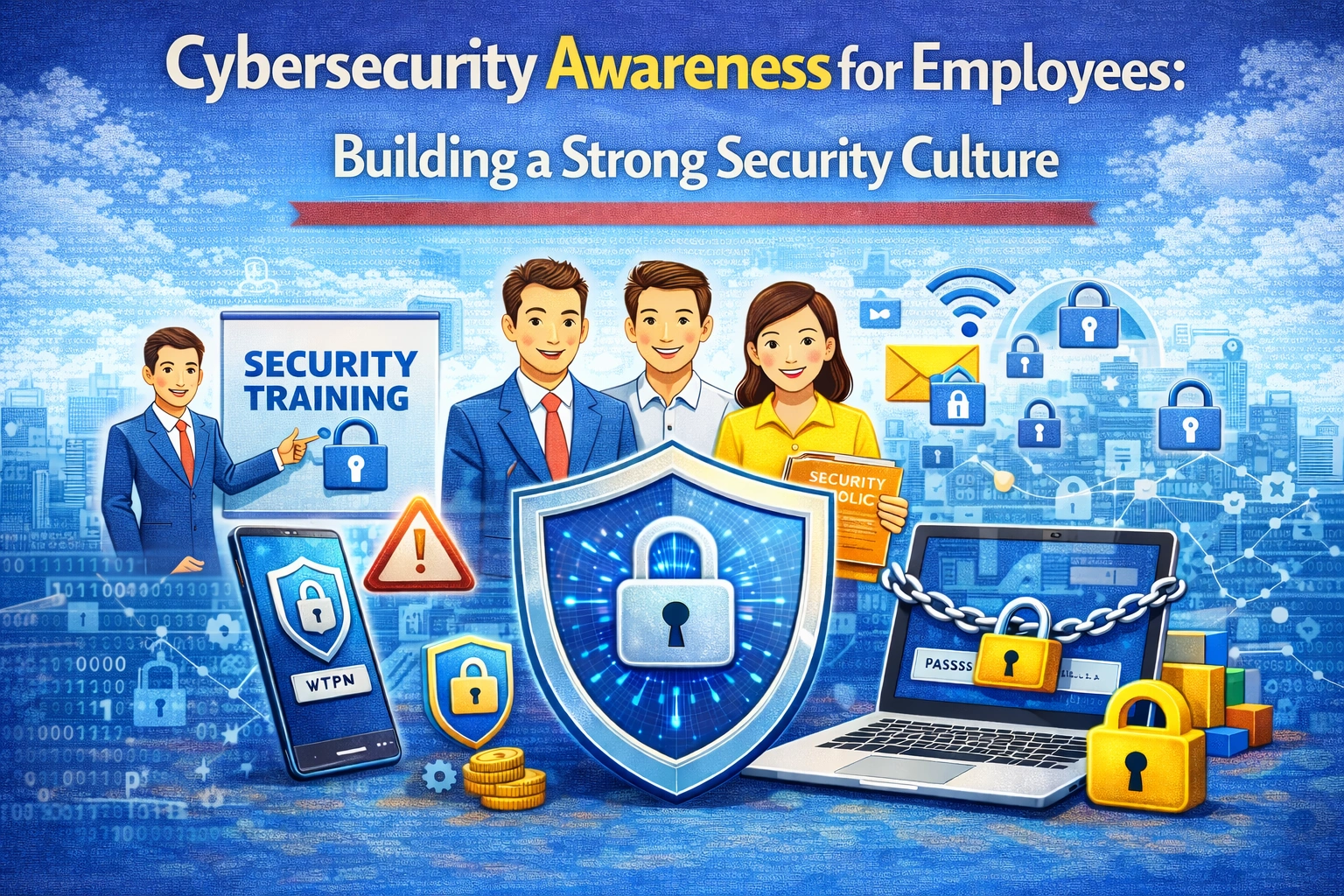

Cybersecurity Awareness for Employees: Building a Strong Security Culture
Technology plays a crucial role in protecting digital systems, but human behaviour often determines whether cybersecurity measures succeed or fail. Many cyber attacks occur because employees unknowingly click malicious links, share sensitive information, or use weak passwords.
This is why cybersecurity awareness for employees is one of the most important components of modern security strategies. When employees understand cybersecurity risks and best practices, they become a powerful line of defence against cyber threats.
Organisations that invest in cybersecurity training significantly reduce the likelihood of security incidents.
Why Employee Awareness Is Important
Cybercriminals often target employees rather than technical systems. Humans are easier to manipulate through techniques such as phishing and social engineering.
Without proper awareness, employees may:
Click malicious email links
Download infected attachments
Share sensitive information unknowingly
Use weak passwords
Connect to insecure networks
Cybersecurity awareness helps employees recognise these risks.
Common Cybersecurity Mistakes Employees Make
Many security incidents occur due to simple mistakes.
Common examples include:
Using the same password for multiple accounts
Opening suspicious email attachments
Ignoring software updates
Sharing confidential information on unsecured platforms
Training helps employees identify and avoid these behaviours.
Recognising Phishing Attacks
Phishing emails attempt to trick employees into revealing sensitive information.
These messages often appear to come from trusted sources such as:
Company executives
IT departments
Banks or service providers
Employees should learn to recognise warning signs such as:
Urgent requests for sensitive information
Suspicious links or attachments
Unusual email addresses
Proper awareness reduces the success rate of phishing attacks.
Safe Password Practices
Strong password management is a key part of cybersecurity awareness.
Employees should:
Use long and complex passwords
Avoid reusing passwords across systems
Use password managers if possible
Enable multi-factor authentication when available
These practices make it more difficult for attackers to access accounts.
Secure Use of Company Devices
Employees often use laptops, smartphones, and other devices for work.
To maintain security, they should:
Lock devices when not in use
Avoid installing untrusted software
Keep operating systems updated
Report lost or stolen devices immediately
Device security protects both personal and business data.
Data Protection Responsibilities
Employees must understand their role in protecting sensitive information.
Important practices include:
Handling customer data responsibly
Following company data protection policies
Avoiding unauthorised data sharing
Using secure communication channels
Responsible data handling supports organisational cybersecurity efforts.
Creating a Cybersecurity Culture
Organisations should encourage a culture where cybersecurity is taken seriously.
This can be achieved by:
Providing regular security training
Sharing updates about new cyber threats
Encouraging employees to report suspicious activity
Establishing clear cybersecurity policies
A security-focused culture improves overall protection.
Benefits of Cybersecurity Training
Businesses that invest in cybersecurity awareness programs often experience:
Reduced risk of cyber attacks
Improved employee confidence in handling digital tools
Better protection of customer data
Stronger regulatory compliance
Employee awareness strengthens the entire organisation.
FAQ
Why is cybersecurity awareness important for employees?
It helps employees recognise cyber threats and avoid actions that could compromise security.
What is the most common employee cybersecurity mistake?
Clicking phishing links or using weak passwords.
How often should cybersecurity training occur?
Many organisations conduct training at least once or twice per year.
Can employee training prevent cyber attacks?
While no system is perfect, training significantly reduces security risks.
Who is responsible for cybersecurity in a company?
Cybersecurity is a shared responsibility involving both IT teams and employees.
