
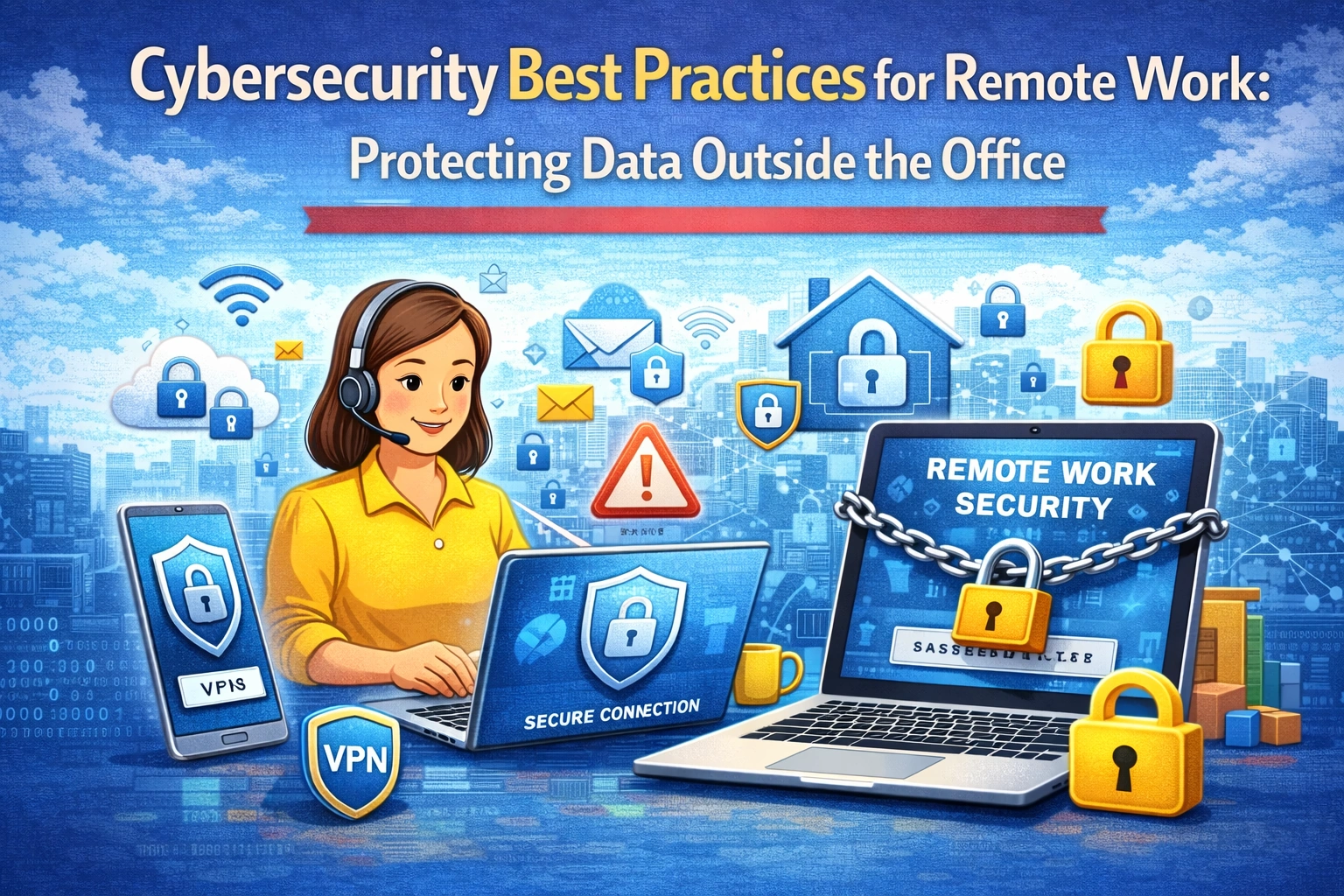

Cybersecurity Best Practices for Remote Work: Protecting Data Outside the Office
Remote work has become a permanent part of modern business operations. Many organisations now rely on distributed teams, cloud platforms, and online collaboration tools to maintain productivity. While remote work offers flexibility and efficiency, it also introduces new cybersecurity risks.
Understanding cybersecurity best practices for remote work is essential for protecting business systems, customer data, and confidential information. Without proper security measures, remote employees can unknowingly expose organisations to cyber threats.
Businesses must implement strong digital security strategies to ensure remote environments remain secure.
Why Remote Work Creates Cybersecurity Risks
Working outside traditional office networks can expose employees to various security threats.
Common risks include:
- Unsecured home Wi-Fi networks
- Use of personal devices for work
- Weak password practices
- Phishing attacks targeting remote workers
- Lack of secure file-sharing practices
Remote environments often lack the strong security infrastructure found in office networks.
Use Strong Password Policies
Passwords remain one of the most important security layers.
Businesses should encourage employees to:
- Use complex passwords
- Avoid reusing passwords across accounts
- Change passwords regularly
- Use password managers for secure storage
Strong password policies reduce the risk of unauthorised access.
Enable Multi-Factor Authentication
Multi-factor authentication (MFA) adds an additional layer of security.
With MFA, users must verify their identity using multiple methods such as:
- Passwords
- Authentication apps
- SMS verification codes
Even if passwords are compromised, MFA prevents attackers from accessing accounts.
Secure Home Networks
Remote employees should ensure their home internet connections are secure.
Recommended practices include:
- Changing default router passwords
- Using strong Wi-Fi encryption
- Keeping routers updated with firmware updates
- Avoiding public Wi-Fi for sensitive work activities
Secure networks reduce exposure to cyber threats.
Use Secure Communication Tools
Remote teams often rely on communication platforms to collaborate.
Businesses should ensure that tools used for communication provide:
- End-to-end encryption
- Secure authentication
- Access control features
Secure collaboration tools help protect sensitive discussions and files.
Keep Software and Systems Updated
Outdated software often contains vulnerabilities that hackers exploit.
Employees should regularly update:
- Operating systems
- Security software
- Collaboration tools
- Web browsers
Regular updates patch security weaknesses and improve system protection.
Educate Employees About Phishing
Phishing attacks remain one of the most common cyber threats targeting remote workers.
Employees should be trained to:
- Recognise suspicious emails
- Avoid clicking unknown links
- Verify unexpected messages from colleagues
- Report suspicious communications immediately
Cybersecurity awareness training significantly reduces phishing risks.
Use Virtual Private Networks (VPN)
VPNs create encrypted connections between remote employees and company systems.
Benefits of VPN usage include:
- Secure data transmission
- Protection from network interception
- Improved privacy when accessing company systems
VPNs are especially important when employees access corporate networks remotely.
Protect Devices and Data
Remote employees should ensure devices used for work are properly secured.
Security practices include:
- Installing antivirus software
- Encrypting sensitive files
- Locking devices when not in use
- Backing up important data regularly
Device security is a critical component of remote cybersecurity.
Building a Secure Remote Work Culture
Technology alone cannot protect organisations from cyber threats. A strong cybersecurity culture is equally important.
Businesses should:
- Establish clear security policies
- Provide regular cybersecurity training
- Encourage employees to report suspicious activities
- Monitor remote access systems
A proactive approach to security strengthens digital resilience.
FAQ
Why is cybersecurity important for remote work?
Remote environments often lack the security controls found in office networks, increasing cyber risks.
What is the biggest security threat to remote workers?
Phishing attacks and weak passwords are among the most common threats.
Should remote workers use VPNs?
Yes. VPNs help protect data when accessing company systems from outside networks.
Are personal devices safe for remote work?
Personal devices can be used if they are properly secured and updated.
How can businesses train employees in cybersecurity?
Through awareness training, security guidelines, and simulated phishing exercises.
