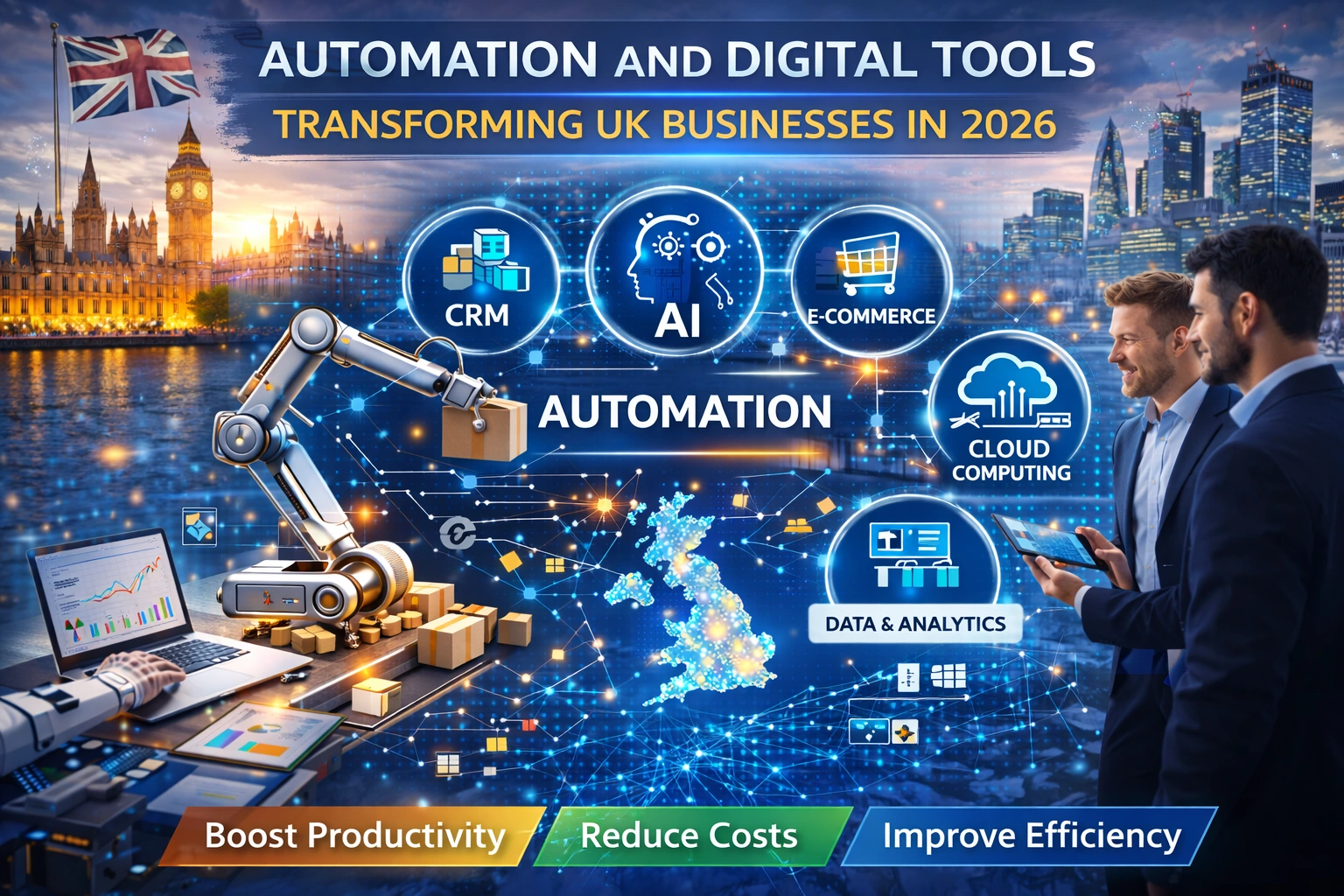

Automation and Digital Tools Transforming UK Businesses in 2026
Across industries, automation and digital tools UK organisations adopt are reshaping how businesses operate. From streamlining workflows to improving customer service, modern technology is becoming a key driver of efficiency and competitiveness.
Automation is no longer limited to large enterprises. Small and medium-sized businesses across the UK are integrating digital systems to remain agile in an evolving market.
This article explores the most impactful automation technologies and how they are transforming UK businesses.
What Is Business Automation?
Business automation refers to using technology to perform repetitive tasks with minimal human intervention.
This may include:
- Automated invoicing
- Customer relationship management (CRM) systems
- Marketing automation platforms
- Inventory management software
- Workflow management tools
Automation reduces errors and improves operational speed.
Why Automation Matters for UK Businesses
Adopting automation and digital tools UK companies rely on can:
- Reduce operational costs
- Improve productivity
- Enhance customer satisfaction
- Increase scalability
- Minimise manual errors
In competitive markets, efficiency directly impacts profitability.
1️⃣ Marketing Automation Tools
Modern marketing platforms allow businesses to:
- Automate email campaigns
- Track customer interactions
- Schedule social media content
- Analyse engagement metrics
This improves customer targeting while saving time.
2️⃣ Customer Relationship Management (CRM) Systems
CRM tools centralise customer data, helping businesses:
- Track interactions
- Monitor sales pipelines
- Improve follow-up processes
- Personalise communication
Stronger customer relationships lead to better retention.
3️⃣ Cloud-Based Accounting Software
Digital accounting platforms automate:
- Expense tracking
- Invoice generation
- Financial reporting
- Tax calculations
Cloud accounting increases transparency and reduces administrative burden.
4️⃣ Workflow and Project Management Tools
These tools allow teams to:
- Assign tasks
- Monitor progress
- Manage deadlines
- Improve collaboration
Automation supports remote and hybrid work environments common in the UK.
5️⃣ Artificial Intelligence Applications
AI-driven tools assist with:
- Chatbots for customer service
- Predictive analytics
- Fraud detection
- Data analysis
AI enhances decision-making and efficiency.
6️⃣ Cybersecurity Automation
Security tools now automate:
- Threat detection
- System monitoring
- Vulnerability scanning
- Incident alerts
Integrating cybersecurity within automation protects digital growth.
Challenges of Automation Implementation
While automation provides benefits, businesses must consider:
- Initial setup costs
- Employee training
- Data security
- Integration with legacy systems
A phased implementation strategy reduces disruption.
How to Implement Automation Successfully
To maximise results from automation and digital tools UK organisations should:
- Identify repetitive, time-consuming processes
- Evaluate suitable digital solutions
- Train staff effectively
- Monitor performance improvements
- Integrate cybersecurity safeguards
Clear planning ensures smooth adoption.
Long-Term Impact on UK Businesses
Organisations that embrace automation experience:
- Increased operational resilience
- Faster service delivery
- Improved scalability
- Competitive differentiation
Digital tools are shaping the future of UK business operations.
Frequently Asked Questions (FAQ)
1. Is automation suitable for small businesses?
Yes. Many affordable tools are designed specifically for SMEs.
2. Does automation replace employees?
Automation supports employees by reducing repetitive tasks.
3. How secure are digital tools?
Security depends on proper implementation and integration with cybersecurity practices.
4. What is the first step toward automation?
Conduct an operational review to identify inefficiencies.
5. Are automation tools expensive?
Costs vary, but many cloud-based solutions offer scalable pricing models.