
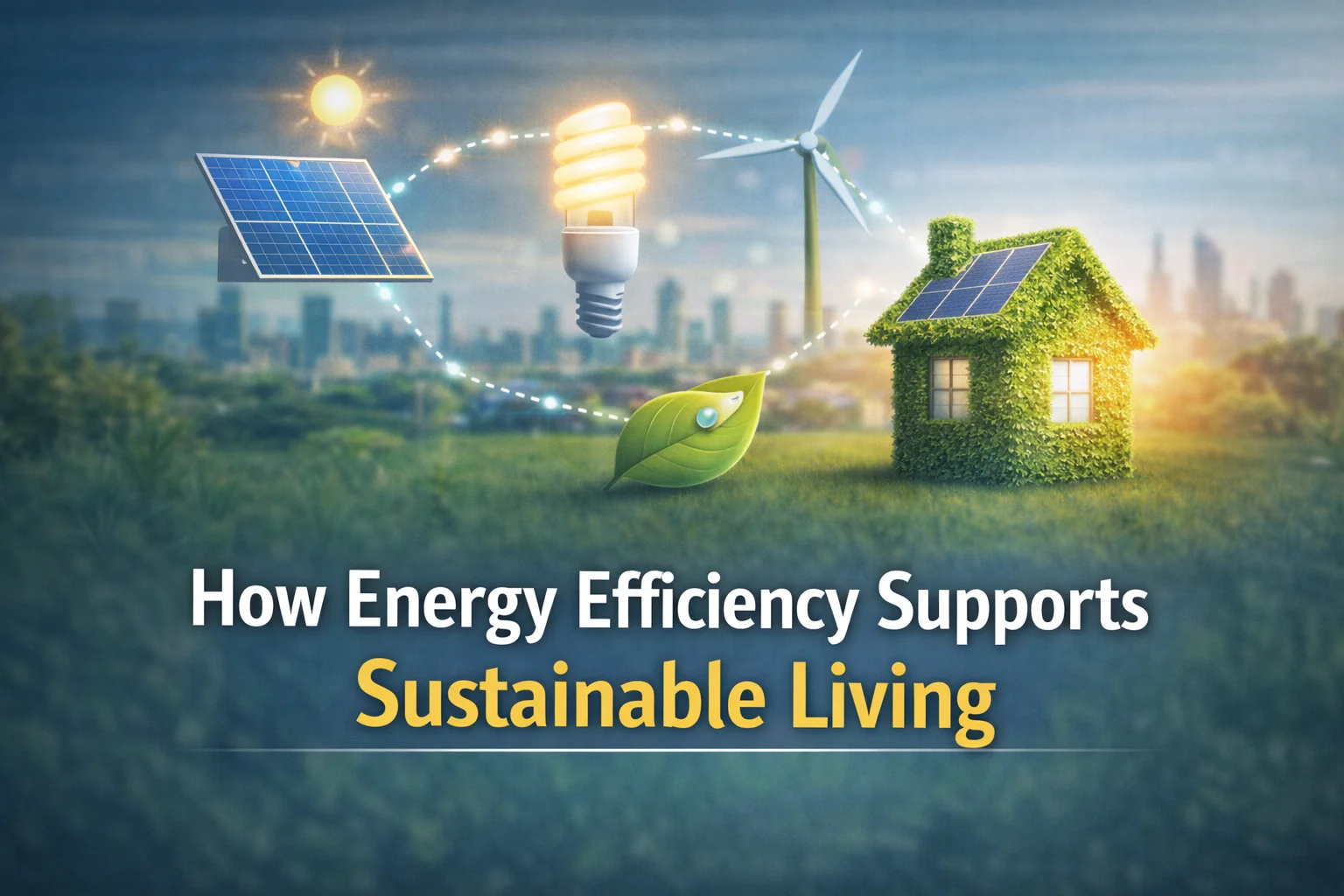

Sustainable living focuses on reducing environmental impact while maintaining a high quality of life. One of the most practical and effective ways to support sustainability is through energy efficiency. By using energy more wisely, individuals and businesses can reduce waste, lower costs, and minimise their carbon footprint.
Energy efficiency is not about sacrificing comfort. It is about making smarter choices that benefit both the environment and long-term financial well-being.
Understanding Energy Efficiency
Energy efficiency means using less energy to perform the same tasks. Whether it is lighting, heating, cooling, or operating appliances, efficient systems deliver the same results while consuming fewer resources.
For example:
- LED bulbs use significantly less electricity than traditional bulbs.
- Energy-efficient appliances reduce power consumption.
- Proper insulation lowers heating and cooling needs.
These improvements may seem small individually, but collectively they make a significant environmental impact.
Reducing Carbon Emissions
Energy production, especially from fossil fuels, contributes heavily to greenhouse gas emissions. By lowering energy demand, energy-efficient practices help reduce carbon emissions.
When households and businesses:
- Use efficient appliances
- Switch to energy-saving lighting
- Improve building insulation
- Optimise heating and cooling systems
they directly contribute to reducing environmental harm.
Energy efficiency plays a crucial role in combating climate change.
Lowering Utility Costs
Sustainable living is not only environmentally responsible — it is financially smart. Efficient energy use reduces electricity and heating bills.
Over time, the savings from:
- Energy-efficient appliances
- Smart thermostats
- Reduced water heating
- Improved insulation
can offset initial investment costs and provide long-term financial benefits.
Conserving Natural Resources
Energy production requires natural resources such as coal, oil, gas, and water. By reducing consumption, energy efficiency helps conserve these limited resources for future generations.
Using less energy means:
- Less fuel extraction
- Reduced environmental damage
- Lower water usage in energy production
Conservation supports sustainable resource management.
Supporting Renewable Energy Integration
Energy-efficient systems complement renewable energy sources like solar and wind power. Lower energy demand makes it easier to rely on renewable sources.
For example:
- Homes with efficient appliances can operate effectively on smaller solar systems.
- Businesses that optimise energy use can transition more smoothly to green energy solutions.
Energy efficiency strengthens the transition to cleaner energy systems.
Improving Indoor Comfort and Health
Sustainable living also focuses on well-being. Energy-efficient buildings often provide:
- Better temperature regulation
- Improved air quality
- Reduced noise levels
Proper insulation and ventilation create healthier living and working environments.
Encouraging Sustainable Habits
Energy efficiency promotes mindful consumption. Small daily habits such as turning off unused devices, reducing standby power, and adjusting thermostats encourage responsible energy use.
When individuals adopt these habits consistently, they contribute to broader sustainability goals.
Conclusion
Energy efficiency is a powerful pillar of sustainable living. By reducing energy consumption, lowering emissions, conserving resources, and cutting costs, individuals and businesses can make meaningful environmental contributions without compromising comfort.
Sustainable living does not require drastic lifestyle changes. Smarter energy choices create long-term benefits for both people and the planet. Explore Al Muhtadi Ventures for more Guide.
FAQs
1. What is energy efficiency?
Energy efficiency means using less energy to achieve the same output, reducing waste and environmental impact.
2. How does energy efficiency help the environment?
It reduces carbon emissions, lowers resource consumption, and minimises environmental damage.
3. Does energy efficiency save money?
Yes. Energy-efficient systems reduce electricity and heating costs over time.
4. Are energy-efficient appliances worth the investment?
In most cases, yes. The long-term savings and environmental benefits outweigh the initial cost.
5. How can households improve energy efficiency easily?
Switch to LED lighting, unplug unused devices, use smart thermostats, and improve home insulation.
