
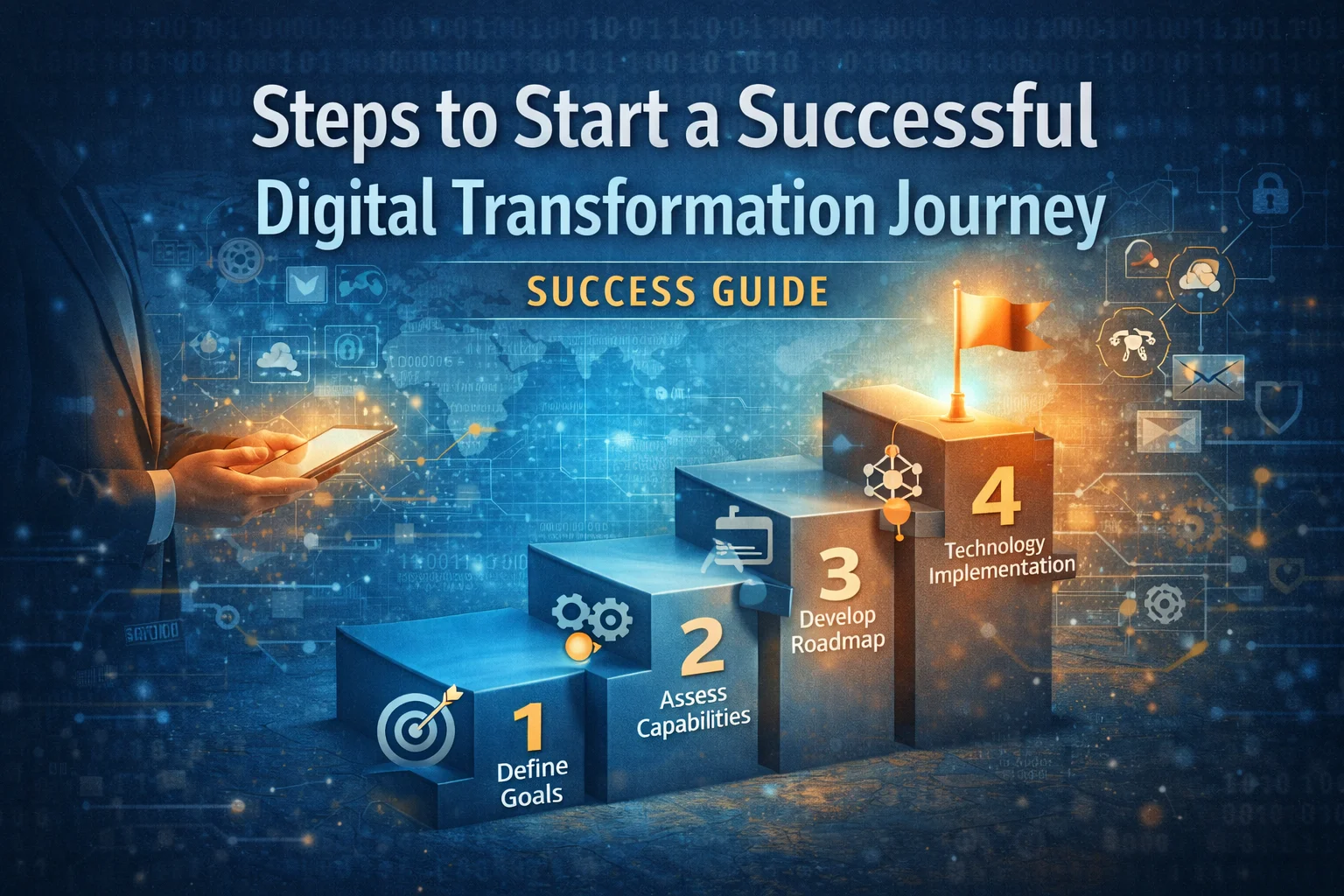

In today’s rapidly evolving business environment, digital transformation is no longer a trend — it is a strategic necessity. Organizations across industries are adopting digital technologies to improve efficiency, enhance customer experiences, and remain competitive. However, starting a digital transformation journey without a clear plan can lead to confusion, wasted resources, and limited results.
A successful digital transformation requires strategic planning, strong leadership, and a clear understanding of business objectives. It is not simply about adopting new technologies — it is about reshaping how a business operates and delivers value.
1. Define Clear Business Objectives
The first step in any digital transformation journey is understanding why change is needed. Businesses must identify specific goals they want to achieve through digital transformation.
Common objectives include:
- Improving operational efficiency
- Enhancing customer experience
- Reducing operational costs
- Increasing scalability
- Driving innovation
Clear goals ensure that technology investments align with overall business strategy.
2. Assess Current Capabilities
Before implementing new systems, organisations should evaluate their current processes, technologies, and digital maturity.
This assessment helps to:
- Identify gaps and inefficiencies
- Understand existing strengths
- Highlight areas needing improvement
- Avoid unnecessary investments
A realistic understanding of the current state provides a strong foundation for transformation.
3. Develop a Strategic Roadmap
Digital transformation should follow a structured plan. A roadmap outlines timelines, priorities, budgets, and key milestones.
A strong roadmap includes:
- Short-term and long-term goals
- Technology adoption phases
- Risk management plans
- Performance indicators
Having a clear direction reduces uncertainty and keeps teams aligned.
4. Secure Leadership and Stakeholder Support
Successful digital transformation requires commitment from leadership. Executives must champion change and communicate its importance across the organisation.
Leadership involvement:
- Encourages employee engagement
- Allocates necessary resources
- Promotes accountability
- Supports cultural change
Without leadership support, transformation efforts often stall.
5. Invest in the Right Technologies
Choosing appropriate technologies is critical. Businesses should focus on solutions that align with their objectives rather than adopting tools simply because they are popular.
Technology considerations include:
- Cloud solutions
- Automation tools
- Data analytics platforms
- Cybersecurity infrastructure
The goal is to build systems that enhance efficiency and flexibility.
6. Prioritise Employee Training and Culture
Digital transformation is not only about technology — it is about people. Employees must understand new tools and feel confident using them.
Training initiatives should:
- Build digital skills
- Encourage collaboration
- Reduce resistance to change
- Promote innovation
Creating a culture that embraces change ensures long-term success.
7. Monitor Progress and Optimise
Transformation is an ongoing process. Businesses should regularly measure progress against defined objectives.
Performance tracking helps:
- Identify areas for improvement
- Adjust strategies when needed
- Ensure ROI from digital investments
- Maintain momentum
Continuous optimisation ensures that transformation efforts remain relevant and effective.
Conclusion
Starting a successful digital transformation journey requires strategic planning, leadership commitment, and a focus on both technology and people. By defining clear objectives, assessing current capabilities, building a roadmap, and investing in training, organisations can create a strong foundation for sustainable digital growth. Digital transformation is not a one-time project — it is a continuous evolution that strengthens competitiveness in the modern marketplace.
✨ For more expert insights on digital transformation strategies, business innovation, and technology trends, explore the resources at Almuhtadi Ventures.
FAQs:
1. What is the first step in digital transformation?
The first step is defining clear business objectives that align with overall company strategy.
2. How long does digital transformation take?
It varies depending on the organisation’s size and complexity, but it is typically a multi-phase, ongoing process.
3. Is digital transformation only about technology?
No. It also involves cultural change, employee training, and process improvement.
4. Why do digital transformation projects fail?
Common reasons include lack of leadership support, unclear goals, and poor change management.
5. Can small businesses start digital transformation?
Yes. Even small businesses can begin with scalable digital tools and gradual implementation.