
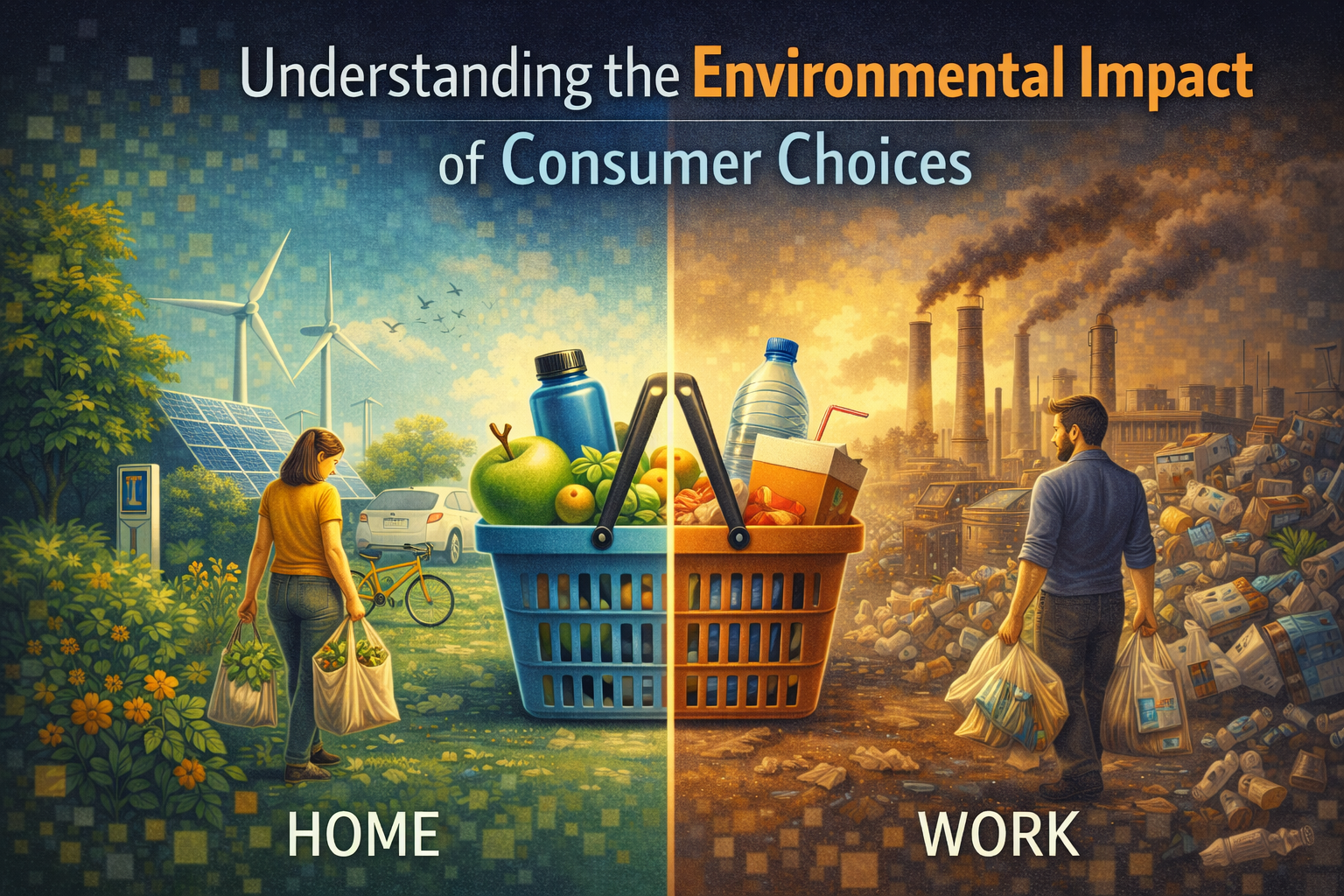

Every purchase decision has an environmental footprint. From the materials used to produce goods to the energy required for transportation and disposal, consumer choices play a major role in shaping environmental outcomes. While large industries contribute significantly to environmental challenges, everyday consumer behavior collectively has a powerful impact. Understanding the environmental impact of consumer choices helps individuals make informed decisions without giving up convenience or quality of life.
Sustainable change begins with awareness.
How Consumer Choices Affect the Environment
Consumer demand drives production. When certain products are purchased frequently, more resources are extracted, processed, and transported to meet demand. This process often involves energy use, emissions, and waste generation.
Environmental effects of consumer choices include:
- Resource depletion
- Energy consumption
- Pollution and emissions
- Waste accumulation
Each decision contributes to the overall environmental footprint.
The Role of Production and Manufacturing
Manufacturing products requires raw materials, water, and energy. Unsustainable production practices can lead to deforestation, water pollution, and high carbon emissions.
Key environmental concerns include:
- Overuse of natural resources
- Chemical waste from production
- High energy consumption
- Short product life cycles
Choosing products made with efficiency and durability in mind helps reduce long-term environmental impact.
Transportation and Packaging Impact
Products often travel long distances before reaching consumers. Transportation adds to emissions, while excessive packaging increases waste.
Environmental challenges linked to transportation and packaging:
- Fuel consumption
- Carbon emissions
- Plastic and packaging waste
Supporting products with efficient distribution and minimal packaging helps reduce environmental strain.
Consumer Demand and Waste Generation
High levels of consumption often result in increased waste. Many products are discarded quickly, contributing to landfill growth and pollution.
Common waste-related issues include:
- Single-use products
- Over-packaging
- Short-lived items
Reducing unnecessary consumption and choosing reusable or long-lasting items can significantly lower waste levels.
The Impact of Fast Consumption Habits
Fast consumption encourages frequent buying and disposal. While convenient, it places pressure on natural resources and waste systems.
Environmental effects include:
- Increased emissions
- Higher waste output
- Reduced product lifespan
Slowing consumption by prioritising quality over quantity supports sustainability.
How Consumer Awareness Drives Positive Change
Informed consumers influence markets. When people prioritise sustainability, businesses are encouraged to adopt more responsible practices.
Consumer awareness leads to:
- Increased demand for sustainable products
- Improved production standards
- Reduced environmental harm
Even small changes in buying behaviour can influence industry trends.
Making More Sustainable Consumer Choices
Sustainable consumer choices do not require perfection. Simple awareness and intentional decisions can make a difference.
Examples include:
- Choosing durable products
- Avoiding unnecessary purchases
- Supporting responsible brands
- Reducing waste
These actions gradually reduce environmental impact without disrupting daily life.
Balancing Convenience and Responsibility
Modern consumers value convenience, but responsibility does not mean inconvenience. Sustainable options are increasingly accessible and practical.
Balancing both involves:
- Making informed choices
- Being mindful of long-term impact
- Prioritising quality and durability
Responsible consumption supports environmental health while maintaining comfort.
FAQs:
1. How do consumer choices affect the environment?
Consumer choices influence production, resource use, waste generation, and emissions through demand for products and services.
2. Do individual choices really make a difference?
Yes. When repeated across millions of consumers, individual choices collectively have a significant environmental impact.
3. Is sustainable consumption expensive?
Not always. Buying fewer, higher-quality products often saves money over time.
4. How can consumers reduce environmental impact easily?
Reducing waste, choosing durable products, and avoiding unnecessary purchases are simple and effective steps.
5. Why is consumer awareness important for sustainability?
Awareness helps people make informed decisions and encourages businesses to adopt environmentally responsible practices.
Conclusion
Consumer choices play a critical role in shaping environmental outcomes. From production and transportation to waste and disposal, everyday decisions influence how resources are used and preserved. By understanding the environmental impact of consumer behaviour and making mindful choices, individuals can contribute to a more sustainable future without sacrificing convenience or quality. Awareness, consistency, and responsibility are key to long-term environmental progress.
✨ For more expert insights on sustainable living, consumer awareness, and eco-conscious choices, visit Almuhtadi Ventures and explore our in-depth guides and practical resources.
