
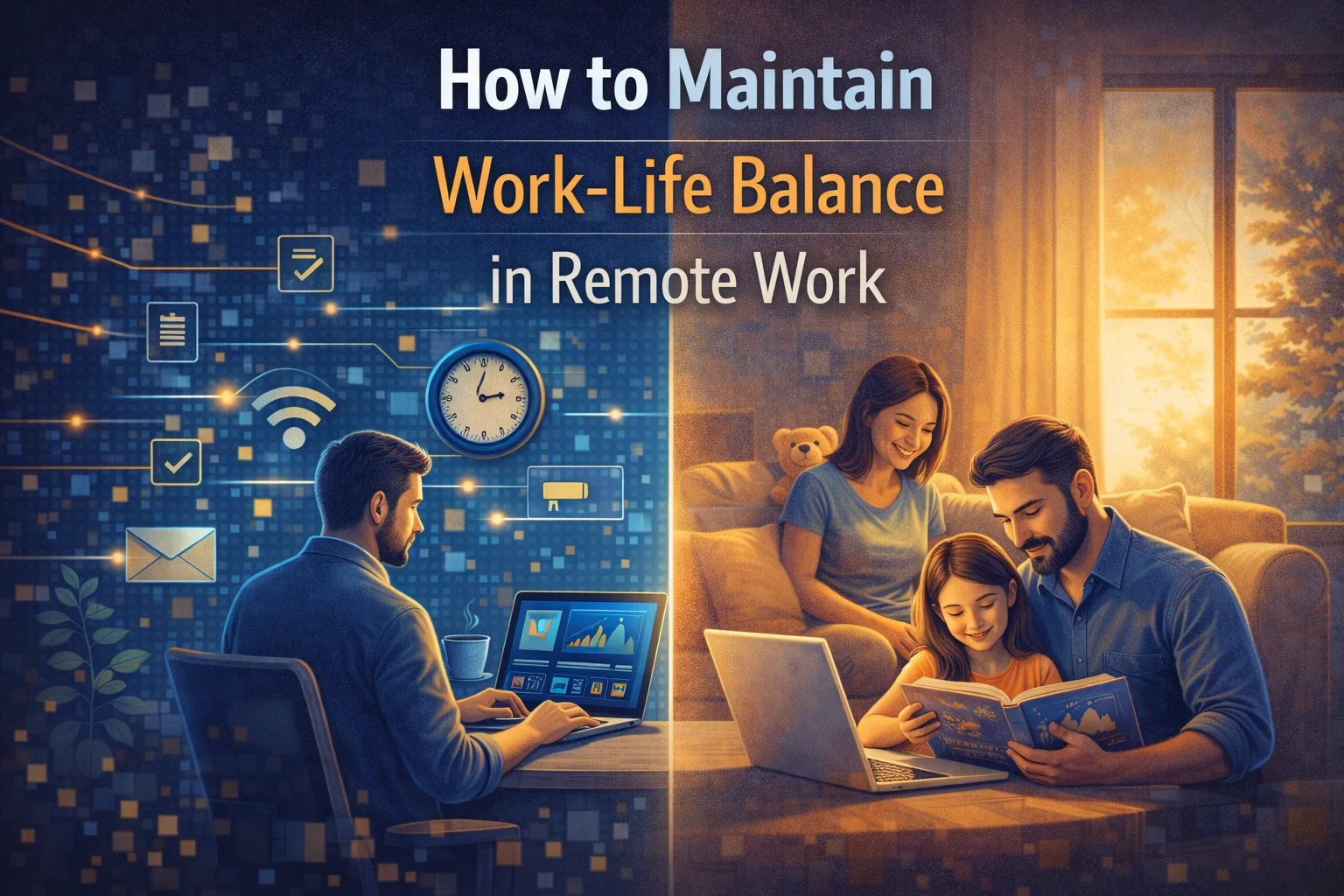

Remote work offers flexibility and convenience, but it can also blur the boundaries between professional and personal life. Without a clear separation between work and home, many remote professionals struggle to switch off, leading to stress and burnout. Maintaining a healthy work-life balance in remote work is essential for long-term productivity, wellbeing, and job satisfaction.
Work-life balance is not about working less—it’s about creating sustainable routines that support both work and personal life.
Why Work-Life Balance Matters in Remote Work
Remote workers often feel pressure to be constantly available. Over time, this can reduce motivation, focus, and overall health.
A balanced approach helps:
- Reduce stress and burnout
- Improve mental and physical wellbeing
- Increase productivity and focus
- Strengthen personal relationships
When balance is prioritised, remote work becomes more sustainable and enjoyable.
Set Clear Work Boundaries
One of the most effective ways to maintain balance is by setting clear boundaries around work hours. Without boundaries, work can easily extend into personal time.
Healthy boundaries include:
- Defining clear start and end times
- Avoiding work outside scheduled hours
- Communicating availability to colleagues
- Turning off work notifications after hours
Boundaries protect personal time and help prevent overworking.
Create a Dedicated Work Space
Having a designated workspace helps create a mental separation between work and personal life. Even a small, consistent work area can make a difference.
A good workspace:
- Is separate from relaxation areas if possible
- Is organised and comfortable
- Signals when it’s time to work
This physical separation helps the brain switch between work and rest modes.
Build a Consistent Daily Routine
Routines provide structure and predictability, which support balance and focus. Starting and ending the day consistently helps establish rhythm.
A balanced routine may include:
- A regular morning start
- Scheduled breaks
- Defined lunch times
- A clear end-of-day ritual
Consistency helps maintain control over the workday.
Take Regular Breaks and Disconnect
Remote workers often skip breaks to stay productive, but this can have the opposite effect. Breaks are essential for maintaining energy and focus.
Effective breaks involve:
- Stepping away from screens
- Stretching or moving
- Spending time outdoors
- Practising relaxation techniques
Disconnecting regularly supports both mental and physical health.
Manage Workload and Expectations
Taking on too much work can quickly disrupt balance. Managing workload realistically helps maintain sustainability.
Healthy workload management includes:
- Prioritising important tasks
- Setting realistic deadlines
- Communicating capacity clearly
- Avoiding unnecessary commitments
Clear expectations reduce pressure and stress.
Stay Connected Outside of Work
Remote work can sometimes feel isolating. Maintaining social connections outside of work supports emotional wellbeing.
Ways to stay connected include:
- Scheduling social time
- Engaging in hobbies
- Maintaining family routines
- Participating in community activities
Strong personal connections improve overall life satisfaction.
Use Technology Mindfully
Technology enables remote work but can also extend work into personal life. Using technology intentionally helps maintain balance.
Mindful technology use includes:
- Limiting after-hours communication
- Managing notifications
- Avoiding constant email checking
Controlling digital access helps protect downtime.
FAQs:
1. Why is work-life balance difficult in remote work?
Remote work blurs boundaries between work and home, making it harder to disconnect and manage personal time.
2. How can remote workers avoid burnout?
Setting boundaries, taking breaks, managing workload, and maintaining routines help prevent burnout.
3. Should remote workers stick to fixed working hours?
Yes. Fixed or structured working hours help maintain balance and prevent overworking.
4. Does having a dedicated workspace really help?
Yes. A dedicated workspace creates mental separation and improves focus and balance.
5. How can employers support work-life balance in remote teams?
Employers can support balance by respecting boundaries, managing workloads, and promoting flexible but structured work practices.
Conclusion
Maintaining work-life balance in remote work requires intentional habits, clear boundaries, and mindful use of time and technology. By creating routines, managing workload, and protecting personal time, remote professionals can enjoy the benefits of flexibility without sacrificing wellbeing. A balanced approach leads to higher productivity, better health, and long-term success in remote work.
✨ For more expert insights on remote work, productivity, and healthy work habits, visit Almuhtadi Ventures and explore our in-depth guides and practical resources.