
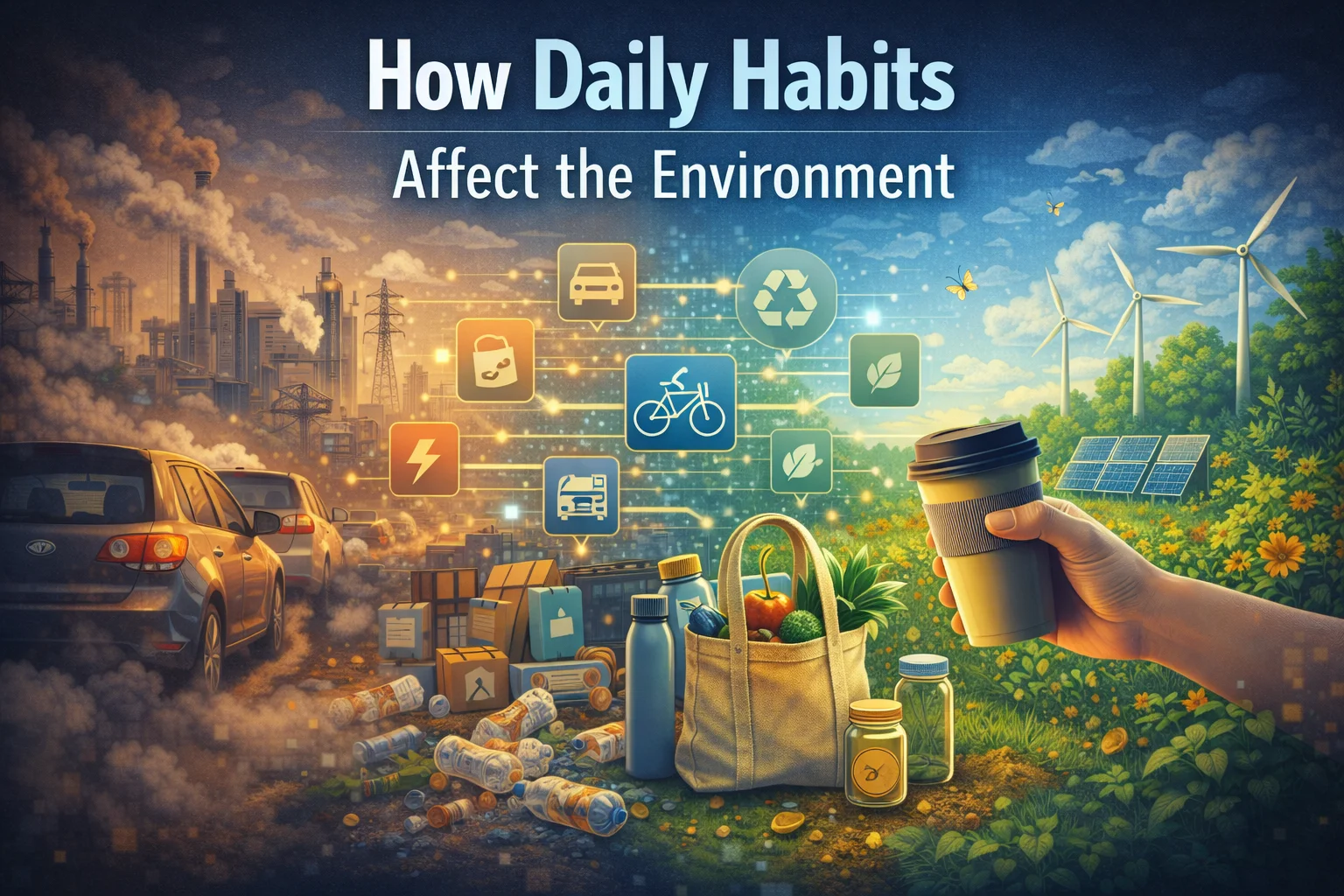

Everyday habits may seem small, but collectively they have a powerful impact on the environment. From how people consume energy and water to the products they buy and dispose of, daily actions shape environmental outcomes over time. Understanding how daily habits affect the environment helps individuals make informed choices that support sustainability without drastically changing their lifestyle.
Environmental impact is not driven only by large industries—individual behaviour plays a vital role.
The Connection Between Daily Habits and Environmental Impact
Daily habits influence how natural resources are used and how much waste is produced. Actions repeated every day, even on a small scale, add up across households, communities, and cities.
Common daily habits that affect the environment include:
- Energy usage at home
- Water consumption
- Transportation choices
- Shopping and consumption behaviour
- Waste disposal and recycling
Becoming aware of these habits is the first step toward reducing environmental harm.
Energy Use in Everyday Life
Energy consumption is one of the most significant contributors to environmental impact. Heating, cooling, lighting, and electronic devices all require energy, much of which still comes from non-renewable sources.
Daily energy-related habits include:
- Leaving lights and devices on unnecessarily
- Overusing heating or cooling systems
- Using inefficient appliances
Small adjustments, such as switching off unused devices and using energy more efficiently, can significantly reduce emissions over time.
Water Consumption and Its Environmental Effects
Water is a valuable and limited resource. Daily activities like washing, cleaning, and cooking all contribute to water use.
Habits that increase water impact include:
- Long showers
- Leaving taps running
- Inefficient water fixtures
Reducing water waste helps conserve freshwater supplies and reduces the energy needed for water treatment and distribution.
Consumption and Purchasing Behaviour
What people buy and how often they buy it directly affects the environment. Manufacturing, packaging, and transportation all require resources and generate emissions.
Consumption habits that increase environmental impact include:
- Frequent purchases of disposable products
- Choosing fast-produced or low-quality items
- Excessive packaging
Mindful consumption focuses on buying only what is needed, choosing durable products, and reducing unnecessary waste.
Waste Generation and Disposal Habits
Waste is a visible outcome of daily habits. Improper disposal and over-consumption lead to overflowing landfills and environmental pollution.
Everyday waste habits include:
- Throwing away recyclable materials
- Overusing single-use plastics
- Wasting food
Improving waste habits by recycling correctly, composting where possible, and reducing food waste helps lower environmental strain.
Transportation Choices and Environmental Impact
Transportation is a major source of emissions. Daily travel habits significantly affect air quality and carbon output.
Transport-related habits include:
- Driving short distances instead of walking
- Relying heavily on private vehicles
- Choosing inefficient travel options
More sustainable transport choices reduce emissions and support cleaner environments.
Food Choices and Sustainability
Daily food choices also influence the environment. Food production requires land, water, and energy, and food waste adds to environmental pressure.
Environmentally impactful habits include:
- Wasting food
- Overconsumption
- Choosing heavily processed products
Planning meals and being mindful of food use can reduce waste and resource consumption.
How Small Habit Changes Make a Big Difference
Sustainable living does not require drastic changes. Small adjustments repeated consistently lead to meaningful impact.
Examples of positive habit changes:
- Reducing energy and water use
- Choosing reusable products
- Minimising waste
- Making conscious purchasing decisions
When these habits become routine, environmental impact decreases naturally.
Building Awareness Through Everyday Actions
Awareness is key to sustainable behaviour. Understanding how actions affect the environment encourages responsible choices.
Informed individuals are more likely to:
- Adopt eco-conscious habits
- Influence others positively
- Support sustainable initiatives
Daily habits shape long-term environmental outcomes.
Conclusion
Daily habits play a crucial role in shaping environmental health. From energy and water use to consumption and waste, everyday actions have lasting effects. By becoming more aware and making small, intentional changes, individuals can significantly reduce their environmental footprint. Sustainable habits do not require perfection—only consistency and conscious effort.
✨ For more insights on sustainable living, eco-conscious choices, and responsible everyday habits, visit Almuhtadi Ventures and explore our in-depth guides and practical resources.