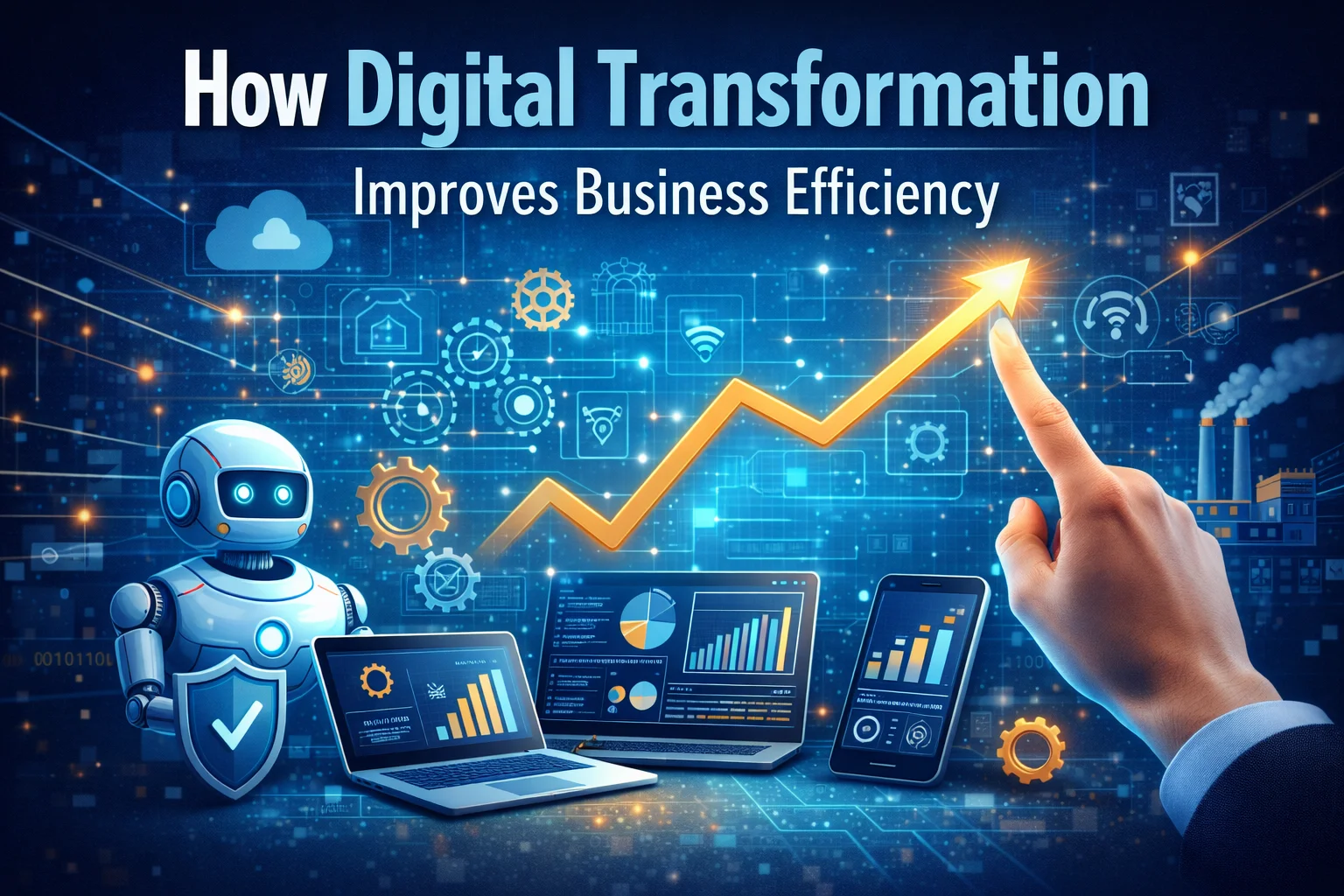

In today’s competitive digital landscape, efficiency has become a key factor in business success. Organizations are expected to operate faster, smarter, and with fewer resources while still delivering high-quality products and services. This is where digital transformation plays a crucial role. By integrating digital technologies into everyday operations, businesses can significantly improve efficiency, reduce costs, and enhance overall performance.
Digital transformation is not just about adopting new tools. It is about reshaping how businesses work, make decisions, and deliver value.
Understanding Digital Transformation in Business
Digital transformation refers to the strategic use of digital technologies to improve processes, workflows, and decision-making. It involves rethinking traditional methods and replacing manual or outdated systems with digital solutions.
For businesses, digital transformation focuses on:
- Streamlining operations
- Reducing inefficiencies
- Improving collaboration
- Enhancing data accessibility
- Supporting scalable growth
When implemented correctly, it creates a more agile and responsive organisation.
Automation Reduces Manual Work
One of the most direct ways digital transformation improves efficiency is through automation. Manual tasks often consume time, introduce errors, and slow down operations.
Automation helps businesses:
- Reduce repetitive administrative tasks
- Improve accuracy in data entry
- Speed up workflows
- Free employees to focus on higher-value work
Automated systems can handle routine processes such as invoicing, reporting, scheduling, and customer communication, leading to faster and more reliable outcomes.
Improved Decision-Making Through Data
Digital transformation enables businesses to collect, analyse, and use data effectively. Instead of relying on assumptions or delayed reports, organisations gain access to real-time insights.
Data-driven decision-making improves efficiency by:
- Identifying process bottlenecks
- Tracking performance metrics
- Predicting trends and demand
- Supporting strategic planning
With accurate data, businesses can make faster and more informed decisions, reducing wasted effort and resources.
Streamlined Communication and Collaboration
Modern digital tools have transformed how teams communicate and collaborate. Cloud-based platforms, shared workspaces, and digital communication tools reduce delays and misunderstandings.
Efficient collaboration leads to:
- Faster project completion
- Improved transparency
- Better alignment across teams
- Reduced dependency on physical locations
Digital transformation supports remote and hybrid work models while maintaining productivity and accountability.
Optimised Business Processes
Digital transformation encourages businesses to review and optimize their existing processes. Many inefficiencies exist simply because processes were designed for outdated systems.
By digitising workflows, businesses can:
- Eliminate unnecessary steps
- Reduce paperwork and manual approvals
- Standardise processes across departments
- Improve consistency and quality
Process optimisation leads to smoother operations and better use of time and resources.
Enhanced Customer Experience
Efficiency is not limited to internal operations. Digital transformation also improves how businesses interact with customers. Faster response times, personalised experiences, and seamless digital interactions all contribute to better customer satisfaction.
Efficient customer-facing processes include:
- Automated support systems
- Faster order processing
- Real-time service updates
- Consistent communication
When customers receive timely and reliable service, businesses benefit from increased trust and loyalty.
Scalability Without Proportional Costs
Traditional growth often requires hiring more staff or expanding physical infrastructure. Digital transformation allows businesses to scale operations without proportional increases in cost.
Digital systems enable:
- Handling higher workloads efficiently
- Expanding services without major disruptions
- Supporting growth with minimal resource strain
This scalability is especially important for businesses aiming for long-term sustainability.
Reducing Errors and Operational Risks
Manual processes are more prone to human error. Digital systems reduce mistakes by standardising workflows and validating data automatically.
Reduced errors lead to:
- Lower rework costs
- Improved compliance
- Greater reliability
- Stronger operational control
Fewer errors mean smoother operations and improved efficiency across the organisation.
Building a Culture of Continuous Improvement
Digital transformation encourages a mindset of ongoing optimisation. Businesses become more adaptable and open to change, regularly reviewing processes and adopting improvements.
This culture supports:
- Innovation
- Faster adaptation to market changes
- Continuous performance improvement
An efficient business is one that evolves with its environment rather than resisting change.
FAQs:
1. What is digital transformation in business?
Digital transformation is the use of digital technologies to improve business processes, operations, decision-making, and customer experiences by replacing manual or outdated systems.
2. How does digital transformation improve business efficiency?
It improves efficiency by automating repetitive tasks, reducing errors, speeding up workflows, enhancing collaboration, and enabling data-driven decision-making.
3. Can digital transformation reduce business costs?
Yes. Digital transformation reduces costs by minimising manual work, improving resource utilisation, lowering operational errors, and allowing businesses to scale without major infrastructure investments.
4. Is digital transformation only for large businesses?
No. Small and medium-sized businesses can also benefit by improving productivity, streamlining processes, and competing more effectively using digital tools.
5. What is the biggest benefit of digital transformation for efficiency?
The biggest benefit is faster and smarter operations—businesses can respond quickly to changes, optimize processes continuously, and maintain long-term operational efficiency.
Conclusion
Digital transformation improves business efficiency by automating tasks, enhancing decision-making, streamlining communication, and optimising processes. It allows organisations to operate more effectively, respond faster to change, and scale without unnecessary costs. In a digital-first world, businesses that embrace digital transformation position themselves for long-term efficiency, resilience, and growth.
✨ For more expert insights on digital transformation, business efficiency, and modern technology trends, visit Almuhtadi Ventures and explore our in-depth guides and practical resources.